

How to Choose a Dog Walker Your Dog Will Actually Love

A trusted dog walker means happy, well-matched pups and total peace of mind for you.
Would you leave your dog with just anyone? A name a friend mentioned once, a friendly face from around the neighbourhood, someone you have never actually watched interact with a dog before? Your dog cannot tell you afterwards if that person was impatient, rough, or careless. And your dog is not just a pet you happen to own. They are family, and family deserves more than a hopeful guess.
Here is the thing worth sitting with for a second: you have known your dog for a certain stretch of your life, but your dog will know you for its whole life. That kind of loyalty deserves real care in return.
Has your dog ever seemed off after a walk? Nervous around the walker, flinching when they reach for the leash, or coming back looking more worn out and thirsty than a simple walk should leave them? Those are quiet signs that something is not right. This guide walks you through exactly what to look for in a dog walker, the questions worth asking, the red flags worth walking away from, and the safety basics that separate a good walker from a great one, so you never have to leave that to guesswork again. And if you would rather skip the search altogether, Amenify connects you with trusted, verified dog walkers who already check every box.
Also Read: A Dog Walk Temperature Chart for Every Season
Why This Decision Matters More Than It Seems
A dog walker isn't just someone who gets your dog from the front door to the nearest tree and back. A good one notices when your dog is limping before you do. A bad one can undo months of leash training in a single week of yanking and dragging. Somewhere in between is a whole spectrum of people calling themselves "dog walkers", and honestly, almost anyone can put that title on a business card. There's no licence required, no universal certification, and no governing body checking credentials at the door.
That's exactly why learning how to find a good dog walker isn't optional homework. It's the whole job.
Ready to find a walker your dog will greet at the door with a wagging tail?
How to Find a Reliable Dog Walker (Where to Actually Start)
Before you get to interviews and meet and greets, you need a shortlist. Here's where that shortlist usually comes from:
Ask people you trust locally. Neighbours fit so your vet's front desk, your groomer, or a local dog training class are goldmines. Someone in your building or on your street has almost certainly been through this search already.
Check neighborhood apps and community groups. Local Facebook groups, Nextdoor, and similar apps tend to have honest, unfiltered opinions, including the complaints that never make it onto a five-star review page.
Search "dog walking service near me" and actually dig in. Don't stop at the map pin. Click through to each walker's or company's page, read their about section, and see how they talk about their approach to dogs.
Look at review platforms with a critical eye. Read the middle-of-the-road reviews, not just the five-star and one-star extremes. A walker with 4.7 stars and a few honest, specific complaints often tells you more than one with a suspiciously perfect record.
The goal isn't to find the walker with the most reviews. It's to find two or three who genuinely seem like a fit, so you can move on to the part that actually matters: meeting them.
Also Read: Home Repairs That Require a Handyman: A Complete Homeowner's Guide
What to Look For in a Dog Walker
This is the heart of it. When you're comparing candidates, run through this list:
Insurance and bonding. A professional dog walker should carry liability insurance. This protects you if your dog is injured on their watch or if your dog injures someone else during a walk. If they work through an app or platform, ask what the platform's coverage actually includes, not just what the marketing page implies.
Real experience with dogs like yours. A walker who's great with a calm senior beagle might be in over their head with a reactive, sixty-pound adolescent. Ask directly about their experience with your dog's size, age, and temperament.
References you can actually contact. Not just a testimonial on their website. Ask for a current client's phone number or email and follow up.
A clear plan for emergencies. What happens if your dog gets loose, gets into a scuffle with another dog, or seems sick mid-walk? A good walker has an answer ready. A vague one hasn't thought about it.
Willingness to do a trial walk. Anyone confident in their skills should be happy to let you tag along on a first walk, or at least do a meet and greet at your home before you commit.
Also Read: How to Become a Dog Walker?
What Makes a Good Dog Walker, Really
Credentials get a walker in the door. Personality and instinct are what actually make a good dog walker good. Here's what separates the great ones from the merely adequate:
They read your dog's body language, not just their leash. A skilled walker notices when a dog's ears go back, when the tail drops, or when a dog stiffens up around another animal and adjusts before things escalate.
They ask you questions, not just give you a price. How does your dog react to strangers? Any medical issues? Food allergies? Favourite route? A walker who's curious about the details is a walker who's paying attention.
They communicate without you having to chase them down. Photos, GPS routes, and a quick note about how the walk went. It doesn't need to be elaborate, but it should be consistent.
They match their group size and pace responsibly. If they offer group walks, ask how many dogs they take at once and how they're chosen. Three or four well-matched dogs with an experienced handler is manageable. Six or more strangers on one leash bundle is a liability, not a walk.
They genuinely seem to like dogs. This sounds obvious, but you can tell within minutes of watching someone interact with your dog whether they're doing this because they love it or because it pays the bills.
Questions Worth Asking Before You Hire
Bring this list to your meet and greet:
Are you insured and bonded?
What's your experience with dogs and is it relevant to my dog's size and temperament?
Do you walk dogs individually or in groups, and how are groups matched?
What equipment do you bring, and what happens if a leash or collar breaks mid-walk?
What's your plan if my dog gets sick, injured, or slips out of their collar?
How do you handle bad weather, extreme heat, or ice?
Will the same person be walking my dog every time?
Can you send updates, photos, or a GPS log after each walk?
If a walker gets defensive or vague about any of these, that's information too.
You can also avail Amenify’s cleaning and moving service with verified staff.
Also Read: How to Find the Best Dog Walker App Near me?
Dog Walker Safety Tips You Shouldn't Skip
Whether you're hiring someone or walking your own dog, these basics matter every single time:
Use a sturdy, properly fitted leash and collar or harness. A 4- to 6-foot neighbourhood leash gives real control without letting your dog wander into traffic or another dog's space.
ID your dog properly. A collar tag with a current phone number is the fast fix. A microchip is the backup that survives a lost collar.
Watch the pavement in extreme heat. Hot asphalt can burn paw pads well before it feels unbearable to human feet. Early morning or evening walks are safer in summer.
Keep phones and headphones out of the equation during the actual walk. A distracted walker has a slower reaction time if something goes wrong.
Always carry a backup leash or slip lead. Gear fails. A spare means a broken leash doesn't turn into a loose dog on a busy street.
Pick up after the dog every time. It sounds unrelated to safety, but it's one of the fastest ways to tell whether a walker takes the job seriously in every small detail, not just the big ones.
Red Flags to Watch For
They can't or won't provide proof of insurance.
They're vague about who's actually walking your dog day to day.
They dodge questions about group size or how dogs are matched.
References feel rehearsed, outdated, or impossible to reach.
Your dog seems anxious or avoidant around them at the meet and greet, and they brush off your concern instead of addressing it.
Trust your gut here. If something feels off in the first meeting, it usually doesn't get better later.
Final Verdict
I'll be straight with you: after going through this research and talking to enough dog owners about their walker horror stories and success stories, the pattern is pretty consistent. The owners who ended up happy weren't the ones who found the cheapest option or the walker with the flashiest app. They were the ones who slowed down for one extra week, did an actual trial walk, and paid attention to how their dog reacted in the room.
Your dog's reaction in that first meeting is honestly more reliable than any five-star review. Dogs are bad at faking comfort. If your dog leans toward someone, that's real data. If your dog backs away or won't settle, believe that too, even if the walker's paperwork looks perfect on paper.
Don't rush this. A great dog walker isn't just a service you're paying for. Over time, they become one of the people who knows your dog's quirks almost as well as you do.
How Amenify Can Help
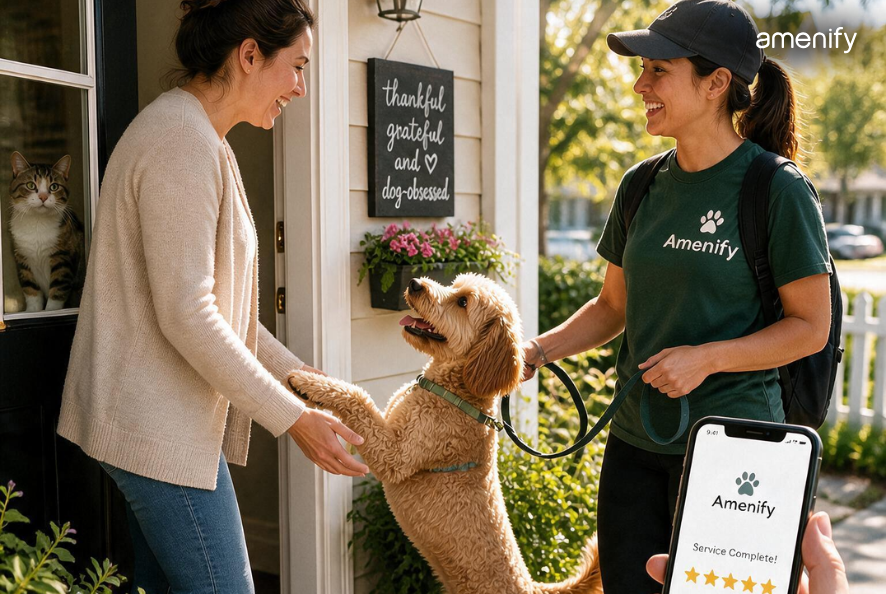
Ready to find a walker your dog will greet at the door with a wagging tail? Book your meet and greet today.
Reading through checklists and red flags is useful, but it is still work, and most people searching "dog walker near me" at 11pm on a Tuesday do not have the bandwidth to interview five strangers before picking one. That is the gap Amenify exists to close. Instead of you chasing down insurance proof, cold-calling references, and hoping a stranger's five-star rating is genuine, Amenify does that vetting on the front end, so every walker on the platform already meets the standard this whole guide has been walking you through.
Amenify matches you with a walker suited to your dog's actual temperament, health needs, and routine, and keeps you looped in with updates after every walk, so you are never left wondering how it went.
Frequently Asked Questions
-
Pricing varies a lot by city and whether it's an individual or group walk, but most areas fall somewhere between a modest per-walk rate for a quick group outing and a higher rate for a private, one-on-one walk. Always ask what's included, since some walkers charge extra for additional dogs, longer sessions, or same-day booking.
-
Most standard walks run 20 to 30 minutes, though many companies also offer 15-minute potty breaks or 45 to 60 minute walks for higher-energy dogs. The right length depends on your dog's age, breed, and energy level more than any fixed rule.
-
For most working pet owners, yes. A midday walk breaks up your dog's day, prevents accidents indoors, and gives them mental stimulation they'd otherwise miss out on entirely until you get home.
-
Insurance, real experience with dogs like yours, contactable references, a clear emergency plan, and a personality that actually fits your dog. Credentials matter, but so does the vibe in the room during your first meeting.
-
Start local: ask your vet, groomer, or neighbors before you turn to an app or search engine. When you do search "dog walking service near me," read past the star rating into the actual review text, and always do a meet and greet before the first paid walk.
