

Tile Cleaning Services: Professional Methods, Costs, and Benefits in 2026

Professional cleaner scrubbing grout lines on a modern apartment bathroom floor.
Professional tile cleaning services help remove accumulated dirt, grime, soap scum, and discoloration from tiled surfaces and grout lines. Depending on the provider, services may include detailed scrubbing, specialized cleaning solutions, hot-water extraction, and optional grout sealing. For apartment residents and homeowners, understanding these options can make it easier to choose an appropriate service without paying for unnecessary treatments.
Whether you have stained bathroom grout, dull kitchen tiles, or heavily used tile floors, this guide explains what professional cleaning involves, how much it costs, and when hiring a specialist makes sense.
What Are Tile Cleaning Services, and What Do They Include?
Tile cleaning services are professional cleaning treatments designed to remove dirt and buildup from tile surfaces and the grout between them. Unlike routine mopping, specialised services may target embedded grime, discoloured grout, and buildup that ordinary household cleaning struggles to remove.
The exact process depends on the tile material, surface condition, and service provider.
Common service components include:
Surface cleaning: Removing loose debris, dust, and surface dirt.
Grout-line scrubbing: Addressing grime accumulated between tiles.
Targeted stain treatment: Treating suitable stains using material-compatible cleaning solutions.
Rinsing and extraction: Removing loosened dirt and cleaning residue.
Optional grout sealing: Applying a compatible treatment to help reduce future staining.
Professional companies such as Stanley Steemer and COIT describe specialised extraction and rinsing processes for tile and grout cleaning. These methods are not necessarily part of a standard house-cleaning appointment.
Also read: Standard Kitchen Cleaning Services
Which areas can benefit from tile cleaning?
Bathroom tiles
Shower walls, bathroom floors, and grout joints can collect soap residue, moisture-related deposits, and everyday dirt. Appropriate cleaning depends on the material and condition of the surface.
Kitchen tiles
Floor tiles and backsplashes may collect grease, food splashes, and tracked-in dirt. Grout near cooking areas may need more detailed attention.
Entryways and high-traffic floors
Frequently used areas can accumulate dirt along grout lines, particularly near doors and walking paths.
Need help keeping your apartment bathroom and tile floors clean? Explore Amenify's apartment cleaning services and check which cleaning options are available for your home.
How Do Professional Tile Cleaning Services Work?
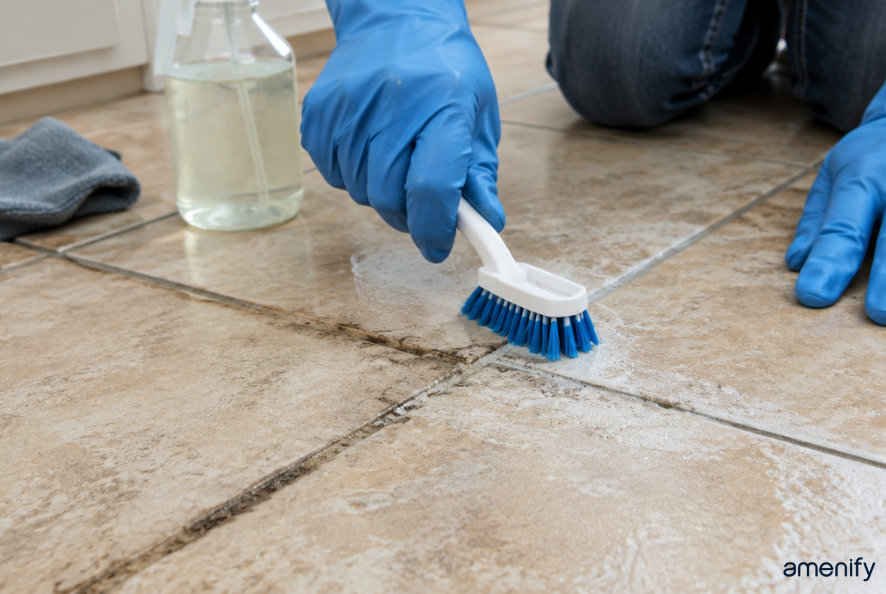
Professionals come with products and skills that gets you that clean look
Specialised tile cleaning generally follows a structured process rather than treating every surface with the same product or machine.
Step 1: Inspect the tile and grout.
A cleaning professional should identify the surface material, type of grout, existing damage, and visible buildup.
Ceramic and porcelain tiles can have different care requirements from natural stones such as marble, limestone, or travertine. Damaged grout, cracked tiles, and loose caulk may require repairs rather than more aggressive cleaning.
Step 2: Remove loose debris.
Dry soil, dust, and grit should be removed before wet cleaning. This reduces the chance of dragging abrasive particles across sensitive surfaces.
Step 3: Apply an appropriate cleaner.
The cleaner should be selected for the specific material and soil.
For cement-based grout, the Tile Council of North America generally favours appropriate alkaline cleaning solutions over acidic products because acids can damage cementitious grout. Natural stone may require neutral or specially formulated products.
Step 4: Agitate or extract embedded dirt
Depending on the service, the cleaner may scrub grout with appropriate brushes or use specialized equipment to loosen and remove buildup.
Some tile specialists use hot-water extraction or equipment that combines water pressure and vacuum recovery. These treatments require equipment settings and methods suited to the installation.
Step 5: Rinse and remove residue
The remaining cleaning solution and dirty water should be removed according to product and material instructions.
Leaving cleaning residue behind can attract additional dirt. The Tile Council of North America specifically emphasizes rinsing and extracting dirty water from grout.
Step 6: Consider grout sealing.
Certain grout types may benefit from a compatible sealer. However, sealing is not automatically required for every tiled surface.
The appropriate treatment depends on grout composition, condition, existing coatings, and manufacturer recommendations. Sealing improves stain resistance rather than making a surface completely stainproof.
Also read: Drain Cleaning Services
Tile Cleaning Methods for Different Tile Materials
Not every tile should be cleaned using the same chemicals or equipment.
The Natural Stone Institute recommends choosing cleaning products according to the actual stone composition and avoiding acidic products on acid-sensitive stone. For renters who do not know their tile material, the safest starting point is to ask property management or review the manufacturer's care guidance before using strong cleaners.
| Tile Material | General Cleaning Approach | Important Caution |
|---|---|---|
| Ceramic | Compatible tile cleaner and gentle scrubbing | Avoid unnecessary abrasive treatment |
| Porcelain | Routine cleaning with suitable products | Check finish and manufacturer instructions |
| Marble | Neutral or stone-approved cleaner | Acidic products can cause etching |
| Travertine | Stone-specific cleaning products | Confirm whether the surface is sealed |
| Limestone | Gentle, non-acidic cleaning | Sensitive to acidic cleaners |
| Natural Stone | Product selected for the specific stone | Some stones need specialist care |
Ceramic and Porcelain Tiles
Ceramic and porcelain are common choices for residential bathrooms and kitchens.
They are generally straightforward to maintain when cleaned with suitable products. However, grout lines may require additional attention, especially in areas exposed to moisture or cooking residue.
Natural Stone Tiles
Natural stone requires more careful maintenance.
Marble, limestone, and travertine can react to acidic cleaners, potentially causing dull spots or permanent surface damage.
Before cleaning unfamiliar natural stone, confirm the appropriate products and methods.
Grout Lines
Grout is often more difficult to clean than the surrounding tile.
Depending on its composition and condition, grout may absorb stains or develop embedded discoloration. Gentle scrubbing with an appropriate cleaner can help remove surface buildup.
Damaged or permanently stained grout may require repair, replacement, or restoration rather than cleaning alone.
Also read: Office Cleaning Services
How Much Do Professional Tile Cleaning Services Cost in 2026?
Professional tile and grout cleaning costs vary depending on the size of the area, material, condition, and location.
Published US consumer-service estimates for 2026 suggest a typical professional tile-and-grout cleaning project may cost approximately $285 to $676, with an average around $480.
Some specialist cleaning estimates range from approximately $0.50 to $3 per square foot, while minimum service charges can affect smaller jobs.
These are general market estimates for specialist tile-and-grout cleaning, not fixed rates or Amenify pricing.
What Factors Affect Tile Cleaning Costs?
1. Size of the Area
Larger tiled surfaces generally require more cleaning time and resources.
Some providers charge based on square footage, while others use fixed project pricing or minimum service fees.
2. Grout Condition
Heavily stained or neglected grout may require additional treatment.
If grout is damaged or permanently discolored, cleaning alone may not provide the desired result.
3. Tile Material
Natural stone may require specialized cleaning solutions and equipment.
These requirements can affect both service availability and pricing.
4. Cleaning Method
Routine scrubbing, hot-water extraction, grout sealing, and restoration are different services.
The more specialized the treatment, the more important it is to confirm the exact scope and price.
5. Property Location
Labor costs and service availability vary across US cities and regions.
Access requirements, parking, and minimum booking charges may also affect the final estimate.
How Can You Compare Tile Cleaning Quotes?
When comparing providers, request an itemized estimate covering the cleaning area, tile material, grout condition, equipment, and any additional treatments.
Make sure each quote covers the same tasks.
A less expensive service may not include grout sealing, stain treatment, or specialized cleaning equipment.
Need help maintaining your apartment between specialized cleaning appointments? Explore Amenify's standard cleaning options to see which everyday tasks are covered.
DIY vs. Professional Tile Cleaning: Which Is Better?
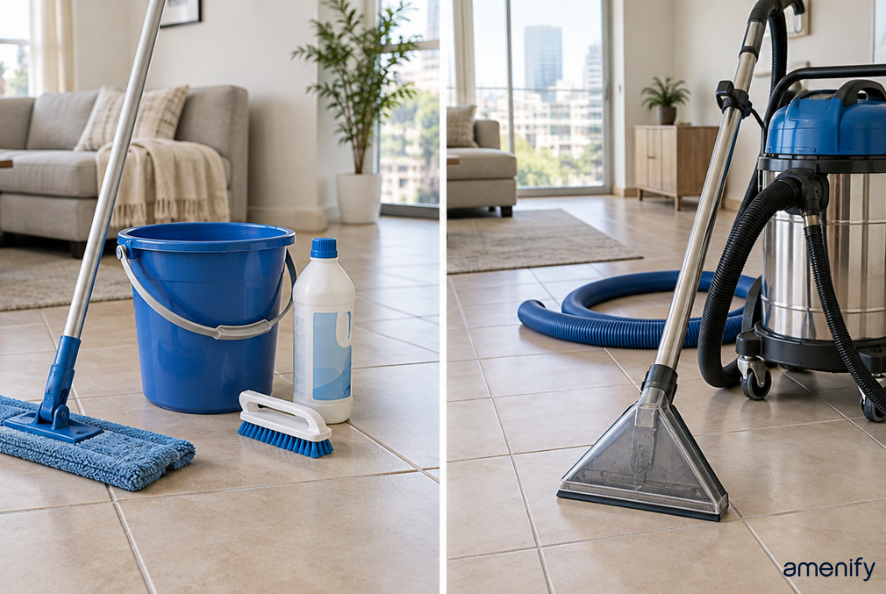
Both DIY and professional cleaning can be useful depending on the condition of the tiles and the amount of work involved.
| Factor | DIY Tile Cleaning | Professional Tile Cleaning |
|---|---|---|
| Cost | Cleaning supplies and personal time | Professional service charges |
| Equipment | Household brushes, mops, and cleaners | May include specialized equipment |
| Best For | Routine maintenance and mild buildup | Embedded dirt and larger areas |
| Convenience | Requires personal effort | Reduces hands-on cleaning work |
| Material Knowledge | Depends on the homeowner | Depends on provider expertise |
| Limitations | May not remove stubborn staining | Cannot repair every damaged surface |
When DIY Tile Cleaning Makes Sense
DIY cleaning is often sufficient for routine maintenance.
For lightly soiled tile floors, regular dust removal, a compatible cleaner, and gentle scrubbing may be enough.
The important consideration is using products appropriate for the tile and grout material.
When Professional Cleaning Is Worth Considering
Professional cleaning may be useful when:
Grout remains visibly discolored after routine cleaning.
Large tiled areas require detailed attention.
Dirt has accumulated over a long period.
The tile material requires specialized care.
Household cleaning methods are not producing satisfactory results.
You want to avoid spending significant personal time on a demanding cleaning task.
However, if tiles are cracked, grout is deteriorating, or there are signs of water damage, repairs may be more appropriate than cleaning.
What Are the Most Common Tile Cleaning Mistakes?
Certain cleaning habits can make tile maintenance less effective or even damage the surface.
Using Vinegar on Every Tile Surface
Vinegar is often recommended as a household cleaner, but it is not appropriate for every tile material.
Because vinegar is acidic, it can damage certain grout types and natural stones such as marble and limestone.
Use a product approved for the material instead.
Using Harsh Brushes or Abrasive Cleaners
Excessively abrasive tools may scratch or wear down sensitive finishes.
Choose cleaning brushes and products according to the manufacturer's recommendations.
Ignoring Grout Discoloration
Grout discoloration can result from embedded dirt, staining, aging materials, or moisture problems.
Routine cleaning may improve its appearance, but damaged or permanently stained grout can require restoration.
Overlooking Moisture Problems
Bathrooms and showers frequently experience moisture buildup.
If dark spots or mold repeatedly appear, the underlying moisture source should be investigated.
Cleaning visible growth without addressing leaks or persistent dampness may not resolve the problem.
Mixing Cleaning Chemicals
Mixing bleach with ammonia-based products or other incompatible cleaners can release hazardous fumes.
Always follow cleaning product labels and avoid combining chemicals.
Booking the Wrong Type of Cleaning Service
A standard house-cleaning appointment may include mopping tile floors and cleaning bathroom surfaces without specialized grout extraction or sealing.
Clarify the service scope before booking.
CTA 3: Want to simplify your regular home cleaning routine? Check the cleaning services available through the Amenify app for your apartment.
How Do You Choose the Right Tile Cleaning Service?
Choosing a tile cleaning provider involves more than comparing prices.
A suitable provider should understand the tile material, explain the cleaning process, and clearly define the expected scope of work.
Questions to Ask Before Booking
Does the service include both tile surfaces and grout lines?
What cleaning products and equipment will be used?
Is the treatment suitable for my tile material?
Are stain treatments or grout sealing included?
Is there a minimum service charge?
How long will the appointment take?
Are there any drying or curing requirements?
What results are realistic for heavily stained grout?
For apartment residents, it is also important to confirm building access requirements and any restrictions on contractors or cleaning equipment.
Special Considerations for Renters
If you live in a rental apartment, review any relevant lease or property-management requirements before arranging specialized cleaning.
Routine housekeeping is different from work involving grout removal, surface coatings, repairs, or alterations.
When a problem appears to involve damaged tiles, leaks, or water intrusion, report it to property management rather than attempting unauthorized repairs.
How Often Should Tile and Grout Be Professionally Cleaned?
There is no single cleaning schedule suitable for every property.
The appropriate frequency depends on foot traffic, moisture exposure, cleaning habits, and tile condition.
As a general industry-service recommendation, some specialists suggest professional tile-and-grout cleaning approximately every 12 to 18 months.
However, this is not a universal requirement. Homes with light use and consistent maintenance may need specialized treatments less frequently, while heavily used areas may need additional attention.
Everyday Tile Maintenance Tips
Sweep or vacuum tile floors regularly to remove grit and dirt.
Wipe up spills promptly.
Use cleaning solutions suitable for the tile material.
Keep bathroom surfaces as dry as practical.
Clean grout lines gently when buildup becomes visible.
Address leaks and damaged grout before they worsen.
Avoid harsh chemicals and abrasive tools unless recommended for the surface.
Consistent maintenance can help prevent dirt from accumulating and reduce the need for intensive cleaning.
How Amenify Can Help With Apartment Tile Cleaning
Amenify offers convenient apartment cleaning services designed to simplify everyday home maintenance for residents. Its cleaning options include routine bathroom cleaning, surface care, and floor cleaning, depending on the service selected and local availability.
For apartment residents managing busy schedules, professional cleaning can help maintain bathrooms, kitchens, and frequently used living spaces without having to handle every task personally.
Specialized services such as high-pressure tile extraction, grout sealing, and restoration should be confirmed separately before booking, as they are not automatically included in routine cleaning appointments.
Make apartment maintenance easier with Amenify. Explore available cleaning services and choose an option that fits your home's needs.

Cleaner tiles with Amenify
Frequently Asked Questions About Tile Cleaning Services
-
Professional tile-and-grout cleaning projects in the US may cost approximately $285 to $676, depending on the area, condition, and service scope. Prices vary by location and provider, and smaller projects may still be subject to minimum booking charges.
-
Professional cleaning may remove or reduce discoloration caused by dirt and buildup. However, some stains are permanent, while others involve damaged grout or moisture issues. In those cases, repair or restoration may be necessary.
-
Marble can be professionally cleaned using suitable products and methods. Because marble is sensitive to acidic cleaners, it is important to choose a provider experienced in natural stone care.
-
Standard house cleaning often includes routine mopping and bathroom surface cleaning. Specialized grout extraction, sealing, and restoration are generally separate services. Always confirm what your appointment includes.
-
Not every grout installation requires sealing. Some grout types may benefit from compatible sealing products, while others have different maintenance requirements. Follow the grout manufacturer's recommendations.
-
Renters can typically arrange routine housekeeping in accordance with their lease and building policies. Specialized treatments, repairs, or modifications may require permission from property management.
-
The time required depends on the size of the area, buildup, tile material, and cleaning method. For services that include sealing, the provider should also explain any drying or curing time before the surface can be used again.
