

What to Expect from Professional Roof Cleaning Services in Seattle
Moss growth on north-facing roof slopes is extremely common across Seattle neighborhoods, and left unchecked, it causes serious structural damage.
Seattle roofs face constant attack from rain, moisture, moss, algae, and debris. This build-up can not only make your home look shabby over time but can also weaken roofing materials, resulting in cracks, leaks, and costly repairs.
That’s why having your roof cleaned professionally is one of the smartest preventative maintenance investments a homeowner can make. But if this is your first time booking the service, you probably have a few questions. What is involved in roof cleaning? How long does it last? What’s the cost? And how can you tell if your roof needs a cleaning today?
In case you're looking for apartment cleaning services in Seattle, look no further than Amenify. We have a team of experienced and professional cleaners.
This guide will answer all those questions clearly and help you understand what to expect before you hire a roof cleaning service in Seattle.
Table of Content
Why Seattle Roofs Need Regular Cleaning
5 Signs Your Roof Needs Professional Cleaning Right Now
What's Included in a Professional Roof Cleaning Service
Cleaning Methods: Soft Wash vs. Pressure Wash vs. Chemical
Service by Roof Type (Asphalt, Cedar, Metal, Tile)
How Often Should You Schedule Roof Cleaning in Seattle?
How to Choose the Best Roof Cleaning Service Near You
What Happens After the Cleaning?
Frequently Asked Questions
“Most Seattle homes get professional roof cleaning every 12–24 months.”
Why Do Seattle Roofs Need Regular Cleaning?
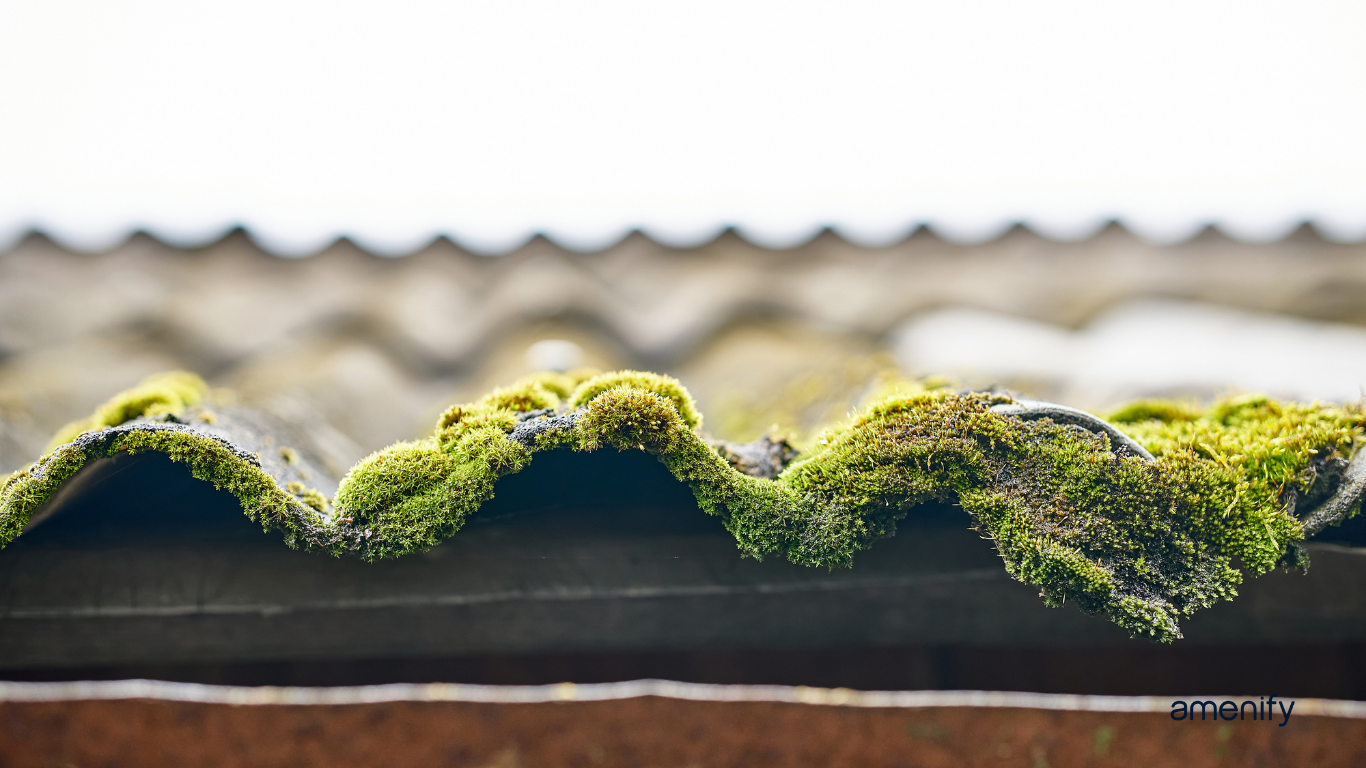
Moss-covered north-facing shingle roof on a Seattle residential home.
Why is Seattle's climate uniquely hard on roofs? The city has around 150 rainy days per year, and neighborhoods like Ballard, Ravenna, and West Seattle sit under dense tree canopies that block drying sunlight for hours after rain. This persistent moisture creates ideal breeding conditions for moss, lichen, algae, and mold.
Here's what makes moss and algae genuinely dangerous to your roof, not just ugly:
Moss holds moisture. It acts like a sponge, pressing water against shingles for days after rain stops. This accelerates rot, mold growth in the attic, and premature shingle failure.
Algae stains and weakens shingles. Black streaking from algae (Gloeocapsa magma) isn't just cosmetic; it feeds on the limestone fillers in asphalt shingles, slowly dissolving the material beneath the surface.
Debris clogs drain channels. Fir needles, leaves, and organic debris pack into roof valleys, gutters, and around skylights, causing water to pool and back up under flashing.
Lichen is the hardest to remove. It bonds directly to roofing material and requires professional treatment to fully neutralize without damaging the surface.
5 Signs Your Roof Needs Professional Cleaning Right Now!
How to know if it's time to call in a pro? Take a walk around your home and look for these five warning signs. Spotting even one is reason enough to get a professional assessment.
Green or black patches on shingles: This one is a no-brainer, visible moss cushions, or dark algae streaks, especially on north- or west-facing slopes that stay shaded the longest. Additionally, have you spotted a water stain spreading across your ceiling or shingles flying off after a storm? These small issues can quickly turn into major headaches if ignored. It’s good to order handyman services for roof repairs.
Gutters overflowing or filled with debris: Clogged gutters mean debris has accumulated on the roof too. Water backing up under shingles is a leading cause of leakage in houses.
Granules collecting in downspouts: if you see granules (the sandpaper-like coating on asphalt shingles) washing off in large quantities, it means that your shingles are deteriorating, which is often accelerated by biological growth.
Energy bills creeping up unexpectedly: A dirty, moss-covered roof insulates less efficiently and makes your home harder to heat and cool, putting extra strain on your HVAC system year-round.
You're preparing to sell: a visibly dirty roof reduces your curb appeal and can also reduce your home's perceived value. Buyers and inspectors will notice it immediately.
Professional cleaners offer a range of services. To ensure you get the most out of these services, proper preparation is key. This is how you can prepare for cleaning services before the technician arrives.
What's Included in a Professional Roof Cleaning Service?
Before hiring a professional roof cleaning service in Seattle, know that this cleaning is more than someone with a hose. Professional roof cleaning typically includes a thorough inspection, moss and debris removal, soft washing, gutter clearing, and protective treatments to prevent future growth. The process concludes with a final walkthrough, ensuring your roof is clean and protected and any repair concerns are clearly identified.
For your reference, here's a step-by-step look at what a standard job actually involves:
Step 1 — Pre-Cleaning Inspection The crew walks the property and assesses roof condition, slope, material type, and extent of moss and algae growth. They identify damaged areas that need attention before cleaning begins.
Step 2 — Plant and Property Protection Nearby shrubs, gardens, and downspout drainage areas are covered or pre-watered to protect them from cleaning solution runoff. Reputed companies like Amenify take this seriously; cleaning chemicals can harm plants if runoff is unmanaged.
Step 3 — Moss and Debris Removal Large moss clumps are carefully brushed or blown off the surface. Debris is cleared from valleys, around skylights, behind chimneys, and from gutter channels using gentle tools that won't damage shingles.
Step 4 — Soft Wash or Chemical Treatment A biodegradable cleaning solution is applied at low pressure across the entire roof surface. This kills remaining spores, algae, and lichen roots, not just the visible growth. The solution is left to dwell before a gentle rinse.
Step 5 — Gutter Flush (often included) Many professional roof cleaning services include a basic gutter flush as part of the job—clearing debris so water drains freely after the roof is cleaned. Some offer full roof drain cleaning service as an add-on.
Step 6 — Preventive Moss Inhibitor Application High-quality companies apply a zinc- or copper-based inhibitor treatment after cleaning. This slows future regrowth significantly, which is especially important in Seattle's damp microclimate.
Step 7 — Post-Cleaning Walkthrough The crew does a final inspection and walks you through what was found, what was done, and any areas needing follow-up repair, such as cracked flashing or missing shingles. Reputable companies document this clearly.
Cleaning Methods: Soft Wash vs. Pressure Wash vs. Chemical
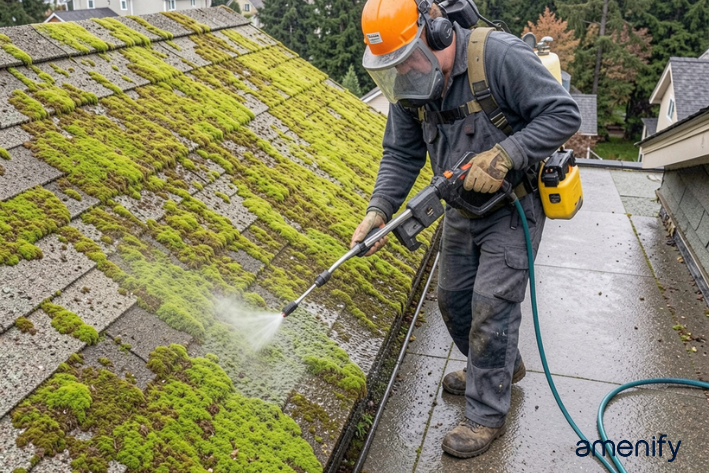
Soft washing: The industry-recommended method for most Seattle roof types uses gentle pressure and specialized solutions rather than forceful water blasting.
Not all roof cleaning methods are equal. The method a company uses tells you a lot about how much they care about your roof's long-term health.
Roof Cleaning Methods Compared
Here are the common roof cleaning methods:
| Method | How It Works | Best For | Risk Level | Seattle Recommendation |
|---|---|---|---|---|
| Soft Washing | Low-pressure water + biodegradable solution | Asphalt shingles, cedar shakes, aging roofs | Low | Highly recommended |
| Pressure Washing | High-pressure water jet to blast debris | Concrete tile, some metal roofs | High | Avoid on asphalt / cedar |
| Chemical Treatment | Concentrated biocide applied, works over weeks | Preventive maintenance, light growth | Medium | Good for maintenance between cleanings |
| Manual Brushing | Physical scrubbing with soft-bristle tools | Spot treatments, metal roofs | Medium | Only if done gently by a pro |
| Zinc/Copper Strip Install | Metal strips release ions that inhibit growth | Post-cleaning prevention | Low | Excellent long-term add-on |
Service by Roof Type: What to Expect for Your Material?
The best professional roof cleaning service in Seattle will tailor their approach based on your specific roof material. Here's what that looks like in practice:
Roof Cleaning by Material Type
Here is a guide for roof cleaning based on the type of material; we will explore the recommended method, cleaning frequency, and some special notes.
| Roof Type | Recommended Method | Cleaning Frequency | Special Notes |
|---|---|---|---|
| Asphalt Shingles | Soft wash only | Every 12–18 months | Most common in Seattle; collects organic film fastest. Avoid high pressure at all costs. |
| Cedar Shakes | Soft wash + moss killer | Every 12 months | Holds moisture in texture. Needs the most frequent care. Sealing after cleaning is recommended. |
| Metal Panels | Low-pressure rinse + mild detergent | Every 18–36 months | Sheds growth more easily. Watch seams and valleys where debris accumulates. |
| Concrete / Clay Tile | Low-pressure wash + chemical treatment | Every 18–24 months | Texture traps debris. Tiles can crack if walked on improperly—verify crew experience. |
| Flat / Low-Slope Roofs | Manual clearing + chemical treatment | Every 12 months | Pooling water accelerates growth. Roof drain cleaning service is often bundled with maintenance. |
How Often Should You Schedule Roof Cleaning in Seattle?
Seattle's climate doesn't offer much recovery time between wet seasons. The general rule: most homes benefit from professional roof cleaning every 12 to 24 months, adjusted for your specific neighborhood, tree cover, and roof material.
| Your Situation | Recommended Frequency |
|---|---|
| Home under heavy tree cover (Ballard, Ravenna, West Seattle) | Every 12 months |
| North- or west-facing roof with limited sun | Every 12–18 months |
| Sun-exposed home (Magnolia Ridge, South Lake Union) | Every 18–24 months |
| Cedar shake roof (any location) | Every 12 months |
| Metal or tile roof in a low-shade area | Every 24–36 months |
| History of heavy moss or prior roof damage | Every 12 months + post-storm checks |
Best seasons to book: Late spring through early fall is the sweet spot for Seattle. Longer dry windows make the cleaning more effective and reduce drying time. Surfaces dry faster, solutions work more efficiently, and crews can verify results before the next rainy stretch arrives.
If you're under heavy tree cover, a second scheduling point in early fall before October storm events push needles into valleys and gutters is also smart. Starting winter with clean drainage channels makes a meaningful difference.
How to Choose the Best Roof Cleaning Services Near Me?
You can follow these instructions to ensure that you get the best roof cleaning services near you:
Licensed and insured in Washington State. Always verify this before anyone gets on your roof. Accidents on your property create liability for you if the company isn't properly covered.
Soft wash method as the default. If a company leads with pressure washing on all roof types without asking about your material, keep looking.
Local experience with Seattle microclimates. A company familiar with moss patterns in Ballard is different from one that has never worked in the Pacific Northwest.
Clear written estimate. Reputable companies provide itemized quotes, not vague "starting from" pricing or estimates that change on the day of the job.
Documented reviews on Google, Yelp, or Nextdoor. Look specifically for reviews mentioning moss removal and Seattle-area work, not just generic praise.
Warranty or satisfaction guarantee. Many of the best roof cleaning services in Seattle back their work with a satisfaction guarantee or a moss-free period after treatment.
Red Flags to Avoid
Recommending high-pressure washing on asphalt or cedar shingles
Unusually low quotes given without a site visit or satellite assessment
Unable to provide proof of insurance on request
No mention of runoff protection or plant safety protocols
Pressure to book immediately or "offer expires today" urgency tactics
What Happens After the Cleaning?
A good professional roof cleaning service doesn't just clean and leave. Here's what you should expect in the days and weeks after the job and what you can do to extend the results.
The roof may not look dramatically different on day one. Soft wash treatments often take 2–4 weeks to show full results as treated moss dies and washes off naturally with rainfall. This is normal and expected; don't judge the work in the first 48 hours.
Check your gutters after the first rain. As dead moss rinses off the roof, it collects in gutters. A quick check about a week after cleaning is good practice, especially on heavily treated roofs.
Trim overhanging branches. The single most effective thing you can do to slow moss regrowth is reduce shade on your roof. Cutting back branches also significantly reduces the debris load your roof accumulates between cleanings.
Schedule a fall check if you're under heavy tree cover. Especially before storm season, check valleys and gutters to confirm drainage channels are clear before the first major rain event.
FAQ
-
Most Seattle homes benefit from roof cleaning every 12 to 24 months. Homes under heavy tree cover or in shaded neighborhoods like Ballard or Ravenna typically need annual service. Sunnier locations like Magnolia can often stretch to 18–24 months. Your roof material also matters; cedar shakes need the most frequent care, while metal panels can go longer between cleanings.
-
Soft washing is the recommended method for most Seattle roof types. It uses low pressure combined with biodegradable cleaning solutions to remove moss, algae, and debris without damaging shingles. High-pressure washing strips protective granules from asphalt shingles and should be avoided. Any reputable professional roof cleaning service will default to soft washing as their primary method.
-
Costs typically range from $300 to $700 for an average-sized Seattle home, depending on roof size, pitch, material type, and the extent of moss or algae growth. Add-ons like gutter cleaning or moss inhibitor application run an additional $75–$200 each. Getting 2–3 quotes from licensed local companies is the best way to ensure fair pricing.
-
Yes, significantly. Moss and algae trap moisture against shingles, accelerating deterioration and potentially causing leaks, rot, and structural damage over time. Regular professional cleaning removes this growth and prevents the moisture retention that speeds up wear. Many roofing experts estimate that consistent cleaning can add 5–10 years to a roof's useful life.
-
When done correctly, yes. Reputable professional roof cleaning services protect nearby plants by covering them before application and pre-watering the soil to dilute any runoff. They use biodegradable cleaning solutions and manage drainage carefully. Always confirm your chosen company has a clear plant protection protocol before work begins.
-
Roof cleaning refers to removing moss, algae, lichen, and surface debris from the roof material itself. Roof drain cleaning service specifically targets the drainage channels, gutters, downspouts, scuppers, and internal drains on flat roofs to ensure water flows freely. Many professional services offer both together, which is the smartest combination for Seattle homes heading into rainy season.
-
Light maintenance like applying over-the-counter moss killer or clearing gutter debris is manageable as DIY. However, for any significant moss growth, steep pitches, or delicate materials like cedar shakes, professional roof cleaning services are strongly recommended. Working on a wet, sloped roof is one of the most common causes of serious home-improvement injuries, and improper technique can also void your roofing warranty.
-
Late spring through early fall is ideal. Longer dry windows allow cleaning solutions to work more effectively, surfaces dry faster, and crews can verify results before the next wet stretch. If you're under heavy tree cover, scheduling a second visit in early fall before October storm season helps you start winter with clean, open drainage channels.
Don't let moss and Seattle's wet climate quietly shorten its life. Book a professional roof cleaning service today before the next rainy season takes hold.
