

Meet Maddie AI: The Residential Intelligence Layer
Historically, we had marketplaces for services and apps for payments. Maddie combines persistent home intelligence, embedded commerce, and real-world execution into one agent. We believe this becomes the residential intelligence layer across millions of homes.
Home Intelligence - Maddie maintains a persistent understanding of the home — service history, seasonal patterns, and maintenance timelines — so residents don’t have to remember anything themselves.
Commerce Intelligence - Housing is the largest recurring spend category. Maddie turns everyday spending into optimized residential value through embedded payments.
Fullfillment Infrastructure - Most AI stops at recommendations. Maddie executes because Amenify owns the fulfillment infrastructure. The important shift is that residents stop managing tasks. The home starts managing itself.
Knowledge Graph - Every interaction enriches what we call the residential knowledge graph. The system compounds intelligence over time.

Maddie AI - Defining a New Category at the Intersection of Home Intelligence, Commerce, and Real-World Execution
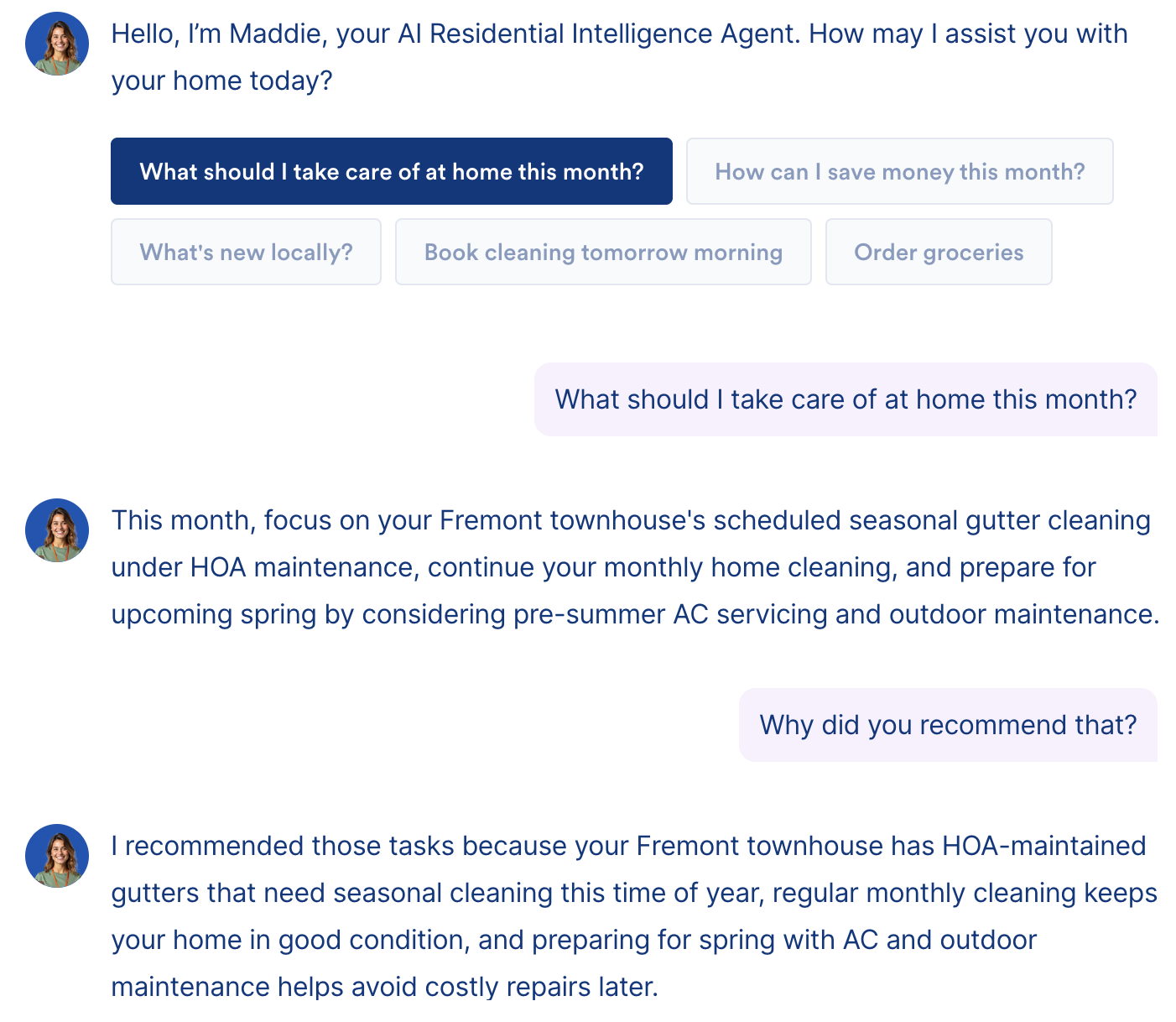


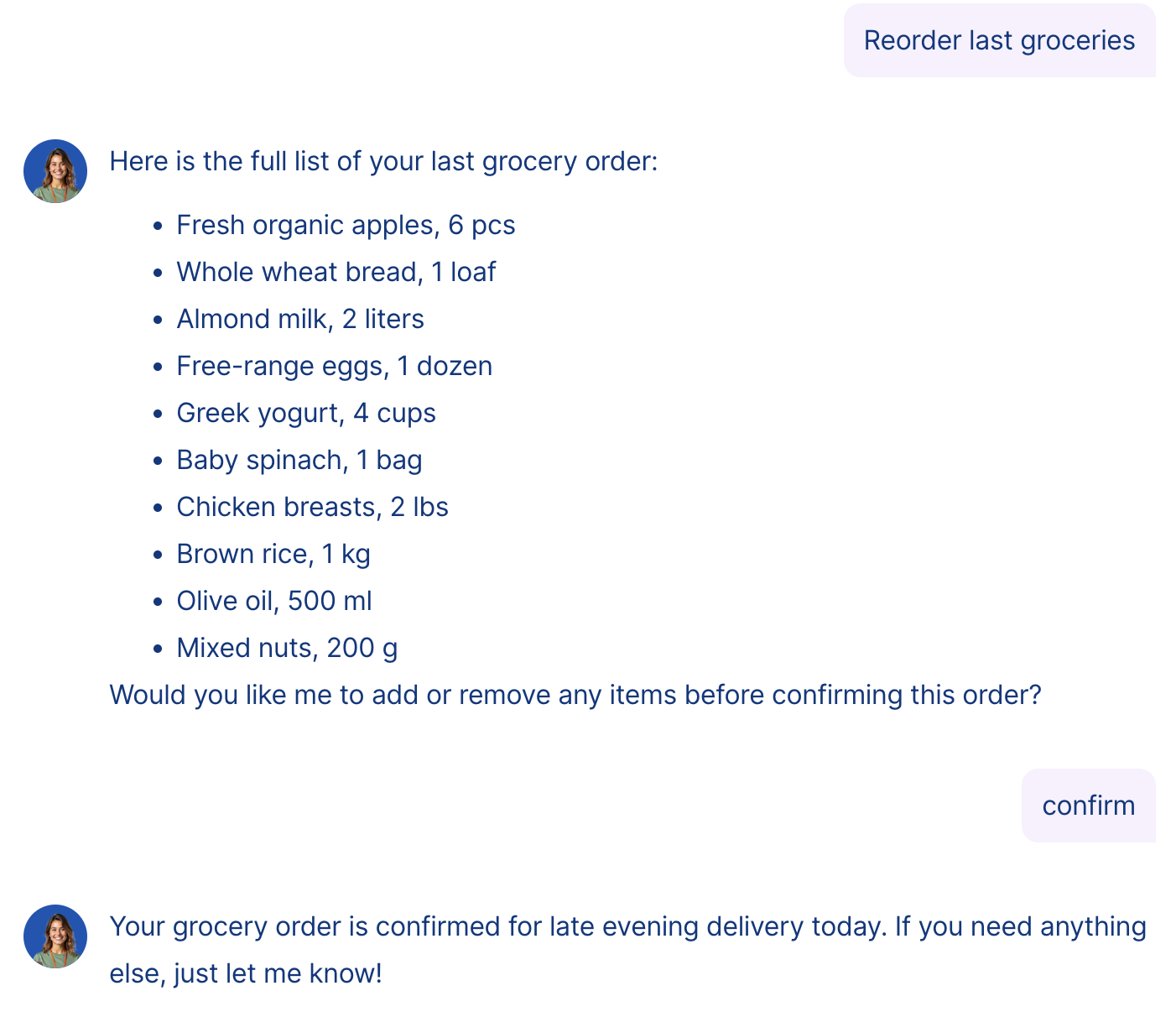
Introduction: Residential Living Is the Last Undigitized Operating Environment
Over the past two decades, software has transformed nearly every major category of daily life.
Finance evolved into programmable infrastructure.
Transportation became algorithmically coordinated.
Commerce shifted from stores to intelligent logistics networks.
Yet residential living — where people spend the majority of their time and money — remains fragmented. Residents still coordinate services manually, make recurring household decisions without context, and navigate local commerce through disconnected applications. Homes accumulate history, but systems do not learn from it. The problem is the absence of an intelligence layer.
At Amenify, we believe the next major consumer platform will emerge not as another application, but as infrastructure that understands and operates residential environments continuously. This belief led us to build Maddie AI.
Category Definition: The Residential Intelligence Layer
We define the Residential Intelligence Layer (RIL) as:
A persistent AI system that understands a residence, optimizes household decisions, orchestrates commerce, and executes real-world outcomes on behalf of residents.
Historically, residential technology evolved in three disconnected phases:
Marketplaces - Enabled discovery but required constant user effort
Property software - Optimized operations but ignored residents
Smart devices - Generated data without coordinated intelligence
The Residential Intelligence Layer unifies these into a single continuously learning system.
Maddie AI represents the first implementation of this architecture at scale across both multifamily communities and homeowner associations.
System Overview
Maddie operates across millions of residences as a persistent AI agent managing residential life rather than individual transactions.
Its architecture combines three previously separate domains:
Persistent Home Intelligence
Embedded Commerce & Financial Incentives
Integrated Service Execution
This integration transforms residential interactions into a closed-loop intelligent system.
Multi-Agent Architecture
Maddie is not a single conversational model. It is a coordinated multi-agent system designed around residential workflows.
Core Agent Layers
Intent Agent - Interprets resident goals across web, SMS, and voice channels.
Context Agent - Retrieves structured residential knowledge including home history, preferences, and environmental signals.
Commerce Agent - Optimizes purchasing and rewards decisions using embedded payment intelligence.
Execution Agent - Triggers real-world fulfillment through Amenify’s operational network.
Learning Agent - Processes outcomes to continuously refine prediction and decision models.
Resident Intent → Context Resolution → Decision Optimization → Execution → Feedback Learning
This architecture allows Maddie to move beyond conversational assistance into autonomous coordination.
The Residential Knowledge Graph
At the core of Maddie is a continuously evolving Residential Knowledge Graph.
Each home becomes a structured system of record composed of:
Service lifecycle data
Maintenance timelines
Spending patterns
Interaction history
Seasonal signals
Neighborhood behavioral trends
Unlike session-based assistants, Maddie maintains persistent longitudinal memory.
Every booking, purchase, and interaction enriches the graph, enabling:
Predictive maintenance recommendations
Cost optimization insights
Behavioral personalization
Proactive service orchestration
Over time, intelligence compounds as the system learns not only about individuals but about homes collectively.
Embedded Commerce & Financial Intelligence
Residential life is fundamentally tied to recurring spending.
Amenify integrates directly with Visa’s payment infrastructure, enabling residents to connect their cards and receive selective cashback as Amenify Wallet credits.
This introduces a programmable economic layer into residential living.
Commerce Intelligence Capabilities
Maddie analyzes:
Household spend behavior
Local commerce patterns
Reward optimization opportunities
Service consumption frequency
The system can therefore:
Recommend actions aligned with financial incentives,
Trigger contextual offers at moments of intent,
Convert everyday spending into residential value.
Unlike traditional loyalty programs, incentives are dynamically orchestrated by AI rather than static partnerships.
Execution Intelligence: Closing the Action Gap
Most AI systems end at recommendation.
Maddie executes.
Because Maddie is directly integrated into Amenify’s fulfillment infrastructure, residents can instantly:
Book home services
Schedule recurring tasks
Initiate deliveries
Modify or cancel orders
Resolve issues and receive refunds
Intent and fulfillment exist within a single system boundary.
This eliminates the historical gap between decision and execution — a key limitation of both marketplaces and standalone AI assistants.
The Closed Learning Loop
Maddie operates as a compounding intelligence system:
Interaction → Context Expansion → Prediction → Execution → Outcome Feedback → Model Improvement
As adoption scales, Maddie learns across millions of homes, enabling:
Demand prediction
Pricing intelligence
Service reliability scoring
Regional behavioral modeling
Scale improves intelligence, and intelligence improves outcomes — creating a reinforcing network effect.
Why This Architecture Is Industry-First
Previous systems addressed only one dimension of residential life:
Commerce platforms optimized transactions
Home intelligence platforms optimized guidance
Service networks optimized fulfillment
Maddie is the first platform that unifies all three into a single AI-native system.
Persistent residential memory
Embedded financial incentives
Real-world execution infrastructure
This integration transforms residential technology from software tooling into operational infrastructure.
Compounding Intelligence Over Time
The value of residential intelligence increases longitudinally.
Year 1: Reactive assistance and booking automation
Year 3: Predictive optimization of services and spending
Year 5+: Autonomous coordination of routine residential decisions
Switching costs increase as historical understanding deepens.
The system becomes more valuable the longer it operates within a residence.
Strategic Implications
As the Residential Intelligence Layer matures, interaction patterns shift:
Residents stop managing services manually
Commerce becomes context-driven rather than search-driven
Homes transition from passive environments to adaptive systems
The interface to residential life moves from apps to agents.
The Long-Term Vision
Housing represents the largest recurring economic category in human life, yet lacks a unified intelligence infrastructure.
We believe the next foundational consumer platform will emerge from solving this gap.
Maddie AI is Amenify’s step toward that future — an intelligence layer that learns continuously, acts instantly, and simplifies the complexity of everyday living.
Not another marketplace.
Not another assistant.
But infrastructure for how people live.