

Your washing machine uses soap with every load, so it must be spotless inside, right? Not so. You need to know how to clean a washing machine because detergent residue and moisture create the perfect environment for odor-causing bacteria to thrive.
Your washer becomes less efficient without regular cleaning and maintenance. Mold can even develop in hidden areas. The good news? Learning how to clean a washer is simple and takes minimal effort when done right. Experts recommend using a washing machine cleaner every thirty days or every thirty wash cycles to prevent buildup.
This piece walks you through what you need, from supplies to step-by-step cleaning methods. Your machine will stay fresh and work better.
Table of Contents
Supplies You’ll Need for Cleaning Your Washing Machine
Step-by-Step Guide to Cleaning the Washing Machine
Different Cleaning Methods for Your Washer
Maintenance Tips to Keep Your Washing Machine Fresh
Conclusion
Supplies You'll Need for Cleaning Your Washing Machine
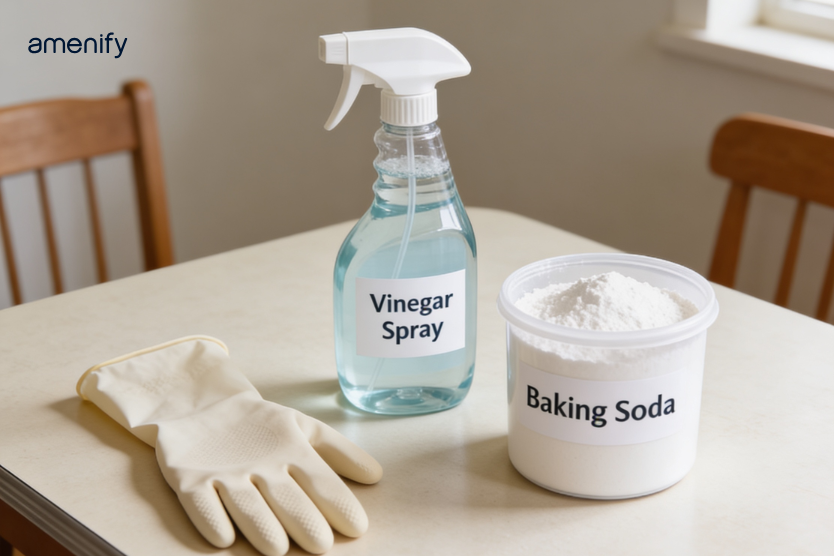
Gather the right supplies before you start any cleaning project. The process becomes easier when you have everything within reach.
Washing machine cleaner tablets or alternatives
Commercial washing machine cleaner tablets offer convenience. Affresh tablets remain a popular choice and are available at approximately $2.00 per tablet. These products contain enzymes and chemicals designed to remove buildup, dirt, bacteria, and odor. OxiClean powder provides another reliable option for those who prefer powder formulations.
Household items work as alternatives that won't break the bank. White vinegar serves as a natural bacteria fighter. 6% acidity vinegar (like Aunt Fannie's) offers stronger cleaning power than standard 5% kitchen vinegar. Baking soda works for deodorizing and softening water. Liquid chlorine bleach cleans in certain washing machines, though you must check your owner's manual first. One critical safety rule applies here: never mix bleach and vinegar. This combination creates dangerous fumes.
Also Read: How to Tackle Spring Cleaning Like a Pro This Year
Simple cleaning tools and materials
Stock up on two microfiber cloths. Use one to clean surfaces and another to dry them. These cloths excel at wiping away residue without leaving lint behind. A spray bottle holds your chosen cleaning solution to apply to external surfaces easily.
You need several brush options for scrubbing tasks. An old toothbrush reaches tight spaces around dispensers and wells. A small scrub brush with soft bristles works on the door gasket and other rubber components. The Scrub Daddy sponge handles stuck-on gunk.
Water management requires specific containers. Place a shallow basin underneath the filter area to catch water during filter cleaning. A 24- to 32-ounce container allows you to soak removable parts like detergent dispensers in hot water or vinegar solution.
Also Read: Standard Cleaning vs Deep Cleaning Your Home: What’s the Difference?
Safety items and protective gear
Rubber gloves protect your hands from cleaning solutions and grime. They become crucial at the time of handling bleach or other strong cleaners. Keep these gloves separate from kitchen gloves to avoid cross-contamination.
Hot water serves multiple purposes throughout the cleaning process. You can use it to soak dispensers and rinse components. Have clean towels or rags available to wipe down surfaces and handle spills during the filter cleaning step.
Step-by-Step Guide to Cleaning the Washing Machine
Follow these steps monthly to maintain your washer's performance and prevent buildup from accumulating inside the machine.
Step 1: Run a cleaning cycle with washer cleaner
Remove all items from the washer tub. Place one washing machine cleaner tablet at the bottom of the washer drum. Never put the tablet in the dispensers. Add 1 cup to the bleach dispenser if using liquid chlorine bleach instead. Select your washer's self-cleaning cycle, or choose a normal wash cycle with hot water and the Deep Fill option. Run a rinse and spin cycle to clear away excess cleansers once the cycle completes.
Step 2: Clean the detergent dispensers and trays
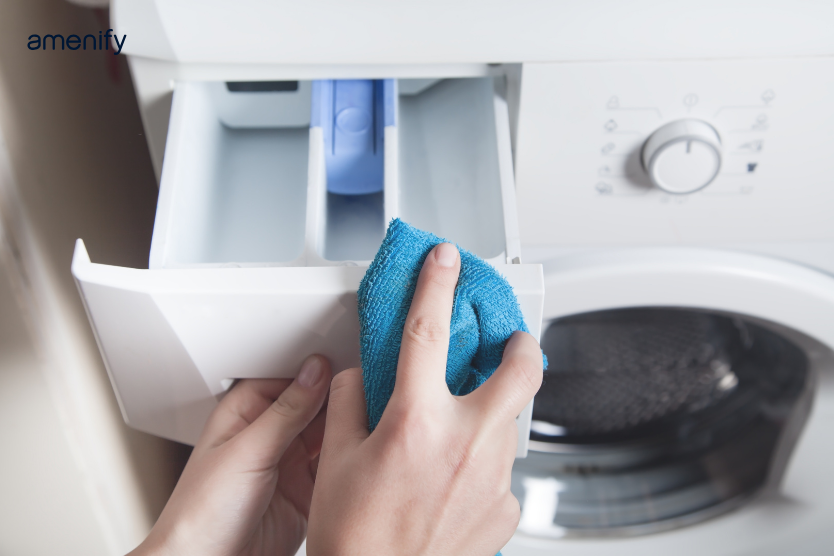
Pull out the dispenser drawer until you feel resistance. Press the release lever if your model has one. Remove any inserts from the drawer. Wash all parts under warm running water and use a soft brush to remove excessive buildup. Clean the dispenser housing with mild soap and water. Never clean removable parts in the dishwasher. Make sure everything is dry before replacing.
Step 3: Scrub the door seal and gasket
Open the washer door and check the rubber seal for debris, especially at the six o'clock position. Pull back the seal folds to inspect all areas. Mix 3/4 cup of liquid chlorine bleach with 1 gallon of warm water. Wear gloves and wipe the seal with this solution using a damp cloth. Let it sit for 5 minutes. Scrub all folds and crevices, then wipe dry with a clean cloth.
Step 4: Clean the agitator or drum
Examine the agitator after the cleaning cycle ends. Wipe down the outside with a damp cloth and mild soap. Gently pull or twist the cap to remove it if your agitator has a removable cap, then wipe the inside. Don't force the cap if it resists.
Step 5: Wipe down the exterior surfaces
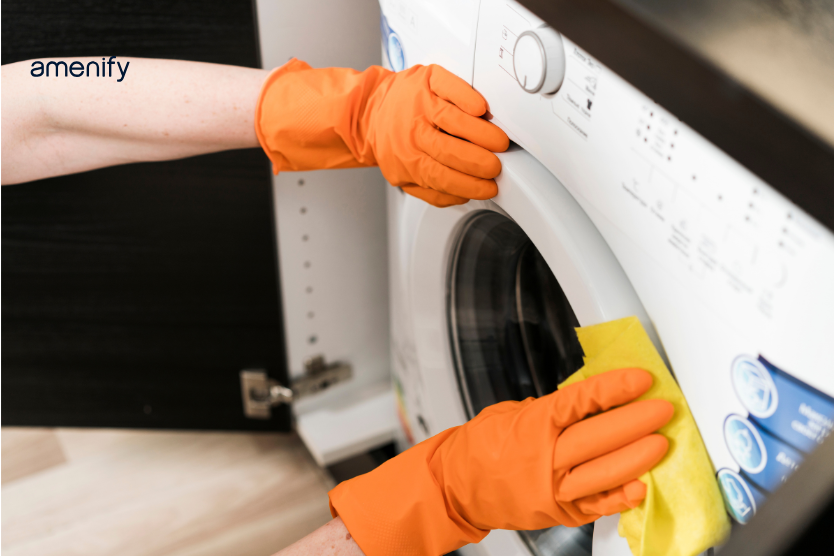
Dust and dirt wipe off with ease using a damp cloth. Clean any detergent or fabric softener spills from the washer surface right away. Use a 50% vinegar and 50% warm water solution for a full cleaning. Dry all surfaces with a towel.
Step 6: Leave the door open to air dry
Prop the washer door or lid open after cleaning. This allows air circulation to dry the interior and prevents mold growth in the damp environment. Leave it open for several hours or until the interior is dry.
Different Cleaning Methods for Your Washer
Several cleaning methods work well to maintain your washing machine. Each approach has unique benefits that depend on your priorities and what supplies you have.
How to clean a washing machine with vinegar and baking soda?
Pour 2 cups of white vinegar into the detergent dispenser or drum and run a hot water cycle. After completion, sprinkle 1/2 cup of baking soda into the drum and run another hot cycle. Run a final rinse cycle to flush residue. This method requires three cycles total and consumes time, water, and energy. Frequent vinegar use can affect coatings on driveshaft components that switch cycles from agitation to spin.
Bleach for your washing machine
Add 1/2 cup of bleach to the bleach dispenser for standard washers or 1/4 cup for high-efficiency models. Select a hot water cycle with at least 10 minutes of circulation time. Never mix bleach with vinegar, ammonia, or other cleaners. This creates dangerous fumes. Always check your owner's manual before you use bleach, as some models don't recommend it.
Hydrogen peroxide method
Add 2 cups of hydrogen peroxide to the drum. Run the largest, hottest cycle available. Hydrogen peroxide acts as a natural bleaching agent that dissolves dirt and stains. It won't damage plastic or stainless steel surfaces.
Commercial washing machine cleaner tablets
Drop one tablet into the drum and run a cleaning cycle. These tablets contain enzymes designed to remove buildup and odor in a single wash.
Maintenance Tips to Keep Your Washing Machine Fresh
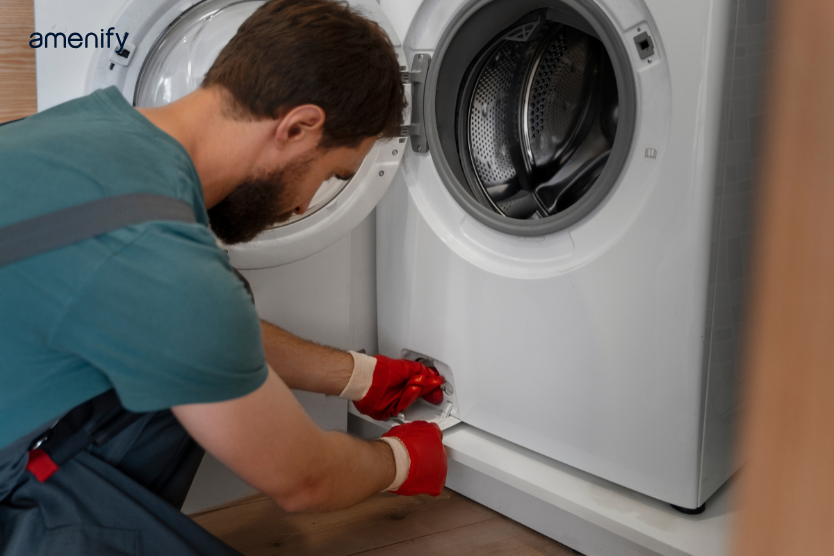
Regular maintenance prevents pricey repairs and extends your washer's lifespan while keeping laundry smelling fresh.
How often should you clean your washing machine?
Clean your washing machine every 30 days or every 30 wash cycles, whichever comes sooner. If you wash loads daily or every other day, bacteria have less chance to grow between uses. Watch for warning signs like musty-smelling clothes, visible mildew around the door seal, or residue in the detergent drawer.
Preventing mold and mildew buildup
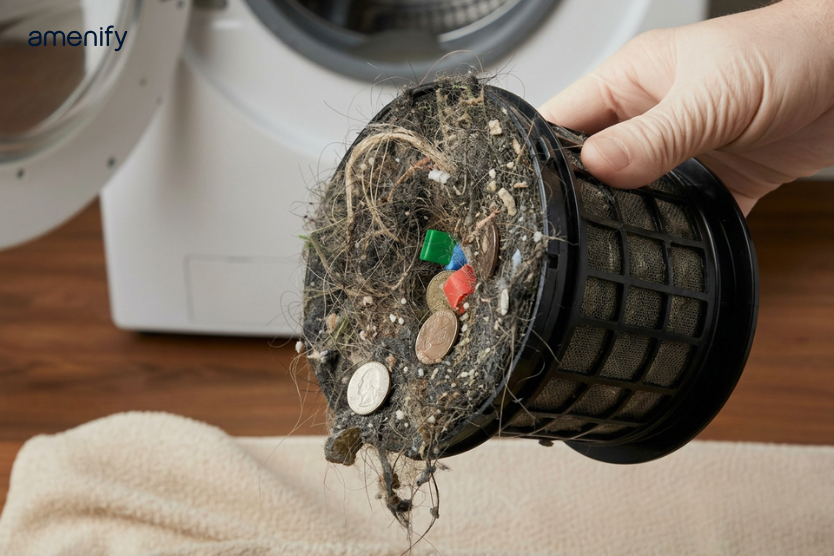
Leave your washer's door open for at least 15 to 30 minutes after each use. This allows air circulation to dry the interior and prevents moisture from creating conditions where mold thrives. On top of that, wipe down the door seals after every load to remove trapped moisture and residue. Check and clean your filter every three months, as trapped lint and debris cause odors if neglected.
Best practices for daily washer care
Remove clothes from the machine as soon as the cycle finishes. Wet laundry left sitting promotes bacterial growth and mildew smells. Run a hot or warm water cycle between cold washes from time to time to prevent soil and detergent buildup. Use high-efficiency detergent in proper amounts, as excess detergent leaves residue that feeds mold.
Conclusion
You now have everything needed to keep your washing machine clean and odor-free. Note that consistency matters most. Clean your washer every thirty days using your preferred method, whether commercial tablets, vinegar, or bleach. Leave the door open after each load and wipe down seals at the end of the day. These habits prevent mold and extend your machine's lifespan while keeping your laundry fresh. Services like Amenify can help with maintenance tasks, but regular cleaning remains your best defense against buildup and odors.
How Amenify Can Help?
With Amenify USA, keeping your washing machine in top condition is simple. Amenify connects you with reliable professionals for appliance cleaning, maintenance, and home care services, helping prevent buildup, odors, and performance issues.
Whether you need routine upkeep or a deep clean, Amenify offers convenient, on-demand support to keep your washer running efficiently.
FAQs
-
Run a hot water cycle with 2 cups of white vinegar in the detergent dispenser or drum, followed by another hot cycle with 1/2 cup of baking soda sprinkled in the drum. Alternatively, you can use commercial washing machine cleaner tablets placed directly in the drum or add 1/2 cup of bleach to the bleach dispenser and run a hot cycle. Always finish with a rinse cycle to remove any residue.
-
You should clean your washing machine every 30 days or after every 30 wash cycles, whichever comes first. If you notice warning signs like musty-smelling clothes, visible mildew around the door seal, or residue in the detergent drawer, it's time for a cleaning regardless of the timeline.
-
No, never mix bleach and vinegar together as this combination creates dangerous chlorine gas fumes that can be harmful. If you want to use both products, run them in separate cleaning cycles—use one for a complete cycle, then run another cycle with the other product.
-
Leave the washer door open for 15 to 30 minutes after each use to allow air circulation and prevent moisture buildup. Remove clothes immediately after the cycle finishes, wipe down the door seals after every load, and use the proper amount of high-efficiency detergent to avoid residue that feeds mold growth.
-
Yes, you should clean the detergent dispenser regularly. Pull out the drawer, remove any inserts, and wash all parts under warm running water using a soft brush to remove buildup. Clean the dispenser housing with mild soap and water, dry thoroughly, and never clean removable parts in the dishwasher.
-
Amenify provides many in-home services. Sign up to get $50 off on your first home service or product.
