

Water Heater Maintenance: How Often Is It Really Needed?
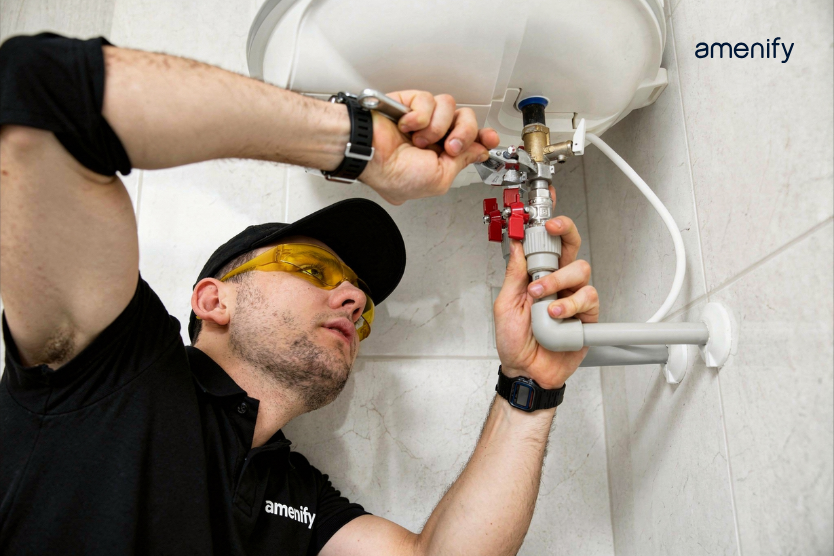
Proper water heater maintenance could save you between 8% and 34% on your home energy bills. Yet many homeowners skip this task, unaware that manufacturers recommend annual servicing and some warranties require proof of yearly maintenance. You face a higher risk of tank ruptures and leaks without regular attention.
Your water heater maintenance schedule depends on several factors. These include whether you have a tankless or tank-based system, your water quality, and your manufacturer's guidelines. Understanding how often you should service water heater units can extend their lifespan from 10 to 15 years (or around 20 years for tankless water heater maintenance). This piece covers everything you need to know about gas water heater maintenance, electric systems, and creating a maintenance routine that works.
Table of Contents
How Often Should You Service Your Water Heater
What Does Water Heater Maintenance Include
Common Problems Found During Water Heater Service
Maintenance Requirements for Different Water Heater Types
Conclusion
How Often Should You Service Your Water Heater?

Manufacturer Recommendations for Annual Maintenance
Most manufacturers recommend servicing your water heater at least once a year. This annual water heater maintenance schedule applies whether you own a tankless or storage-based system. Technicians inspect the anode rod, thermostat, heating elements, and pressure relief valve during this yearly service. Tank flushing to remove sediment buildup is a critical part of this annual checkup and prevents corrosion while maintaining efficiency.
Kenneth Ezzell, a product expert with A.O. Smith, confirms that flushing at least once a year works for households with regular usage and a storage temperature of 120 degrees Fahrenheit. Gas water heaters require more frequent flushing than electric models. Environments with severe usage or untreated water need flushing every six months, experts recommend.
Warranty Requirements and Compliance
Your manufacturer's warranty requires annual professional maintenance to remain valid. Most water heater warranties last between six and 12 years, with some offering 10-year conditional replacement coverage. Evidence of insufficient maintenance could result in claim denial if you submit a repair request for a warranted issue.
Warranty agreements stipulate that water heaters must receive professional maintenance service at least once each year. On top of that, your home insurance policy might deny coverage for water damage if your heater ruptures due to maintenance neglect. Routine inspections, flushing, and leak checks help you avoid claim denials.
Hard Water Areas May Need More Frequent Service
Hard water increases your water heater maintenance schedule requirements dramatically. Jacksonville municipal water contains between 14 and 28 grains per gallon (GPG) of hard water minerals. The Water Quality Association classifies water above 10.5 GPG as "very hard," making Jacksonville's water up to three times harder than this threshold.
Hard water regions require you to flush your tank every six months rather than annually. Some Jacksonville homeowners replace their sacrificial anode rods annually and flush tanks every six months. Tankless systems in hard water areas above 15 GPG should be flushed every six months for extra protection.
Tankless vs Tank-Based Maintenance Schedules
Both tankless and traditional water heaters benefit from annual professional service. Tankless manufacturers recommend preventive maintenance annually, with warranties requiring it. These units need descaling with commercial solutions to break down scale and remove mineral deposits. Poor-water areas require you to schedule tankless water heater maintenance once a year.
Tank-based systems require annual flushing as a baseline. Plan to drain and flush the tank about once a year, leaning toward six-month intervals if your water sits on the higher end of hardness or if you use large volumes of hot water.
What Does Water Heater Maintenance Include?
Professional water heater maintenance services tackle five critical tasks that keep your system running well. Each component requires specific attention to prevent failures and extend your unit's lifespan.
Tank Flushing and Sediment Removal
Minerals in your water supply settle at the tank bottom with time. This sediment shortens your water heater's lifespan and increases energy consumption. You'll notice reduced hot water capacity, hollow sounds when tapping the tank or changing near the valve, or drain valve clogs as signs of sediment buildup.
Turn off the power, attach a garden hose to the drain valve, and route it outdoors to begin the flushing process. Open the cold water inlet briefly once you drain the tank to loosen remaining sediment. Repeat this process several times until the drain water runs clear if sediment accumulation is extreme.
Sacrificial Anode Rod Inspection and Replacement
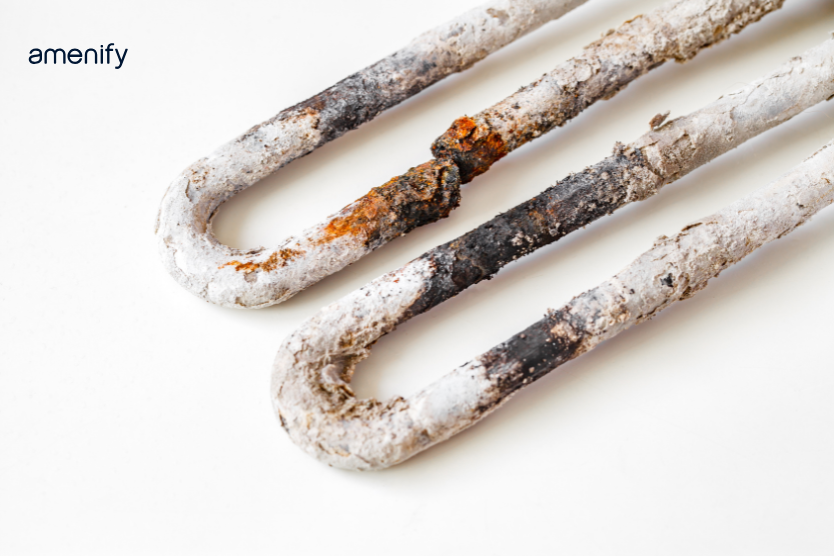
Anode rods attract corrosive elements in water and protect your tank from rust. Check the rod condition every three years and replace it approximately every five years to potentially double your water heater's life. Magnesium, zinc, or aluminum rods corrode down to their core wire eventually, and your tank becomes vulnerable at that point.
Testing Pressure Relief Valves
Test your temperature and pressure relief valve every 6 to 12 months. Lift the testing lever to release pressure—you should hear water discharging. Replace the valve right away if no water flows or the lever won't lift.
Checking All Connections and Seals
Inspectors verify that connections remain tight and free from corrosion. Check for leaks around the tank, inlet/outlet connections, and drain valve after each maintenance session.
Thermostat Calibration and Temperature Adjustment
Factory thermostats arrive set at 140 degrees Fahrenheit, typically. Adjust yours to 120 degrees Fahrenheit to reduce scalding risk and lower energy costs. Electric heaters have two thermostats—set both to similar temperatures for optimal performance.
Common Problems Found During Water Heater Service
Service calls show five recurring issues that compromise water heater performance. Early detection of these problems prevents expensive repairs and system failures.
Sediment Buildup and Reduced Efficiency
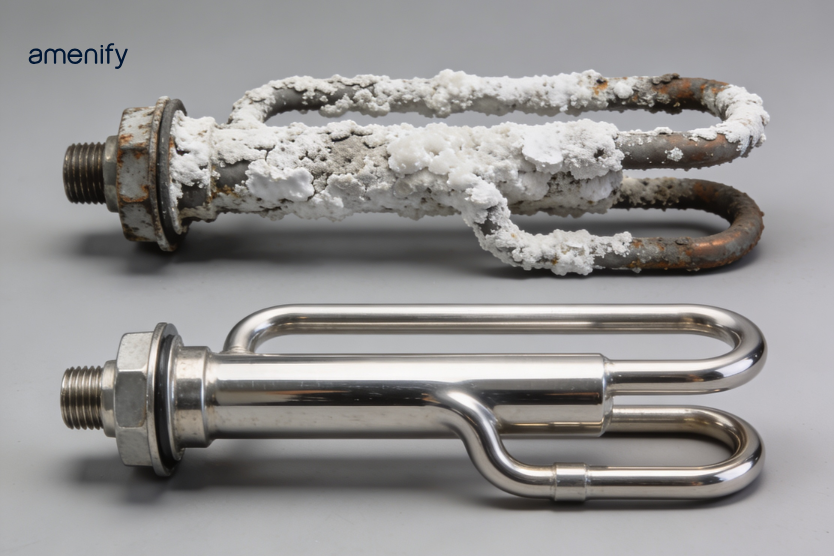
Minerals like calcium and magnesium settle at the tank's bottom and create an insulating barrier between the heating element and water. Your heater works harder as a result, which increases energy bills and wait times for hot water. Sediment also causes popping or rumbling sounds as steam bubbles form underneath hardened deposits. The buildup leads to tank overheating and premature component failure over time.
Corroded Anode Rods
Technicians often find anode rods that are nowhere near half their original diameter or heavily pitted. Rusty hot water and rotten-egg odors signal that your rod has stopped protecting the tank. Hard water and well water systems corrode rods within 1-4 years, while soft water extends their life to 5-10 years.
Faulty Pressure Relief Valves
Sediment deposits inside the valve, worn seals, or corrosion cause pressure relief valves to stick or fail. Continuous dripping from the discharge pipe, failure to open during manual testing, or visible mineral buildup indicate valve problems that require immediate replacement.
Water Discoloration Issues
Brown or rusty hot water points to sediment accumulation or interior tank corrosion. Bacterial growth produces foul-smelling, murky water when heaters sit at low temperatures.
Cracked Dip Tubes and Plastic Particles
Small white plastic fragments clogging faucet aerators show deteriorating dip tubes. These broken tubes cause lukewarm showers and inconsistent water temperatures as cold water mixes with heated water at the tank's top prematurely.
Maintenance Requirements for Different Water Heater Types
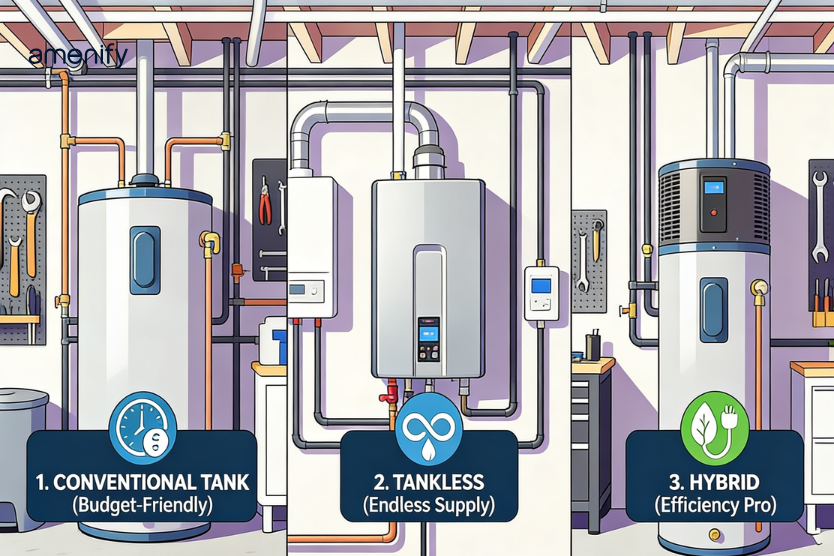
Each water heater type just needs specific maintenance procedures beyond standard tasks.
Gas Water Heater Maintenance Needs
Gas-fired water heaters contain substantially more parts compared to electric models. This complexity increases the service time required, which you should factor into maintenance costs. Gas units need burner assembly inspections to verify proper combustion and airflow. Technicians check for flame color and clean the combustion chamber during annual service.
Electric Water Heater Service Requirements
Heating elements require testing with a multimeter after power shutoff. Set the multimeter to ohms and measure the electrical resistance between the screw on each element and three points: screw, element, and tank body. Most water heaters should read between 10 and 16 ohms, with 13 ohms as the middle range. Very low or zero readings indicate element replacement. Electric units feature top and bottom heating elements, each with its own thermostat. Test thermostats by measuring ohms at the highest and lowest temperature settings. Readings other than close to zero require thermostat replacement.
Tankless Water Heater Maintenance Guide
Water filters near the cold water line need cleaning every three months. Air filters on gas tankless units prevent particles from entering the air supply and require similar quarterly cleaning. Condensing tankless models produce condensate that needs safe disposal through cup or filter cleaning every three months.
Conclusion
Annual water heater maintenance can cut your energy bills by up to 34% and extend your system's lifespan. Hard water areas need service every six months instead of yearly to prevent sediment damage and expensive failures.
Create a maintenance schedule based on your water quality and heater type. Companies like Amenify offer servicing that protects your warranty coverage and prevents emergency breakdowns. Regular attention to this overlooked appliance pays dividends through lower bills and reliable hot water for years to come.
How Amenify Can Help?
With Amenify USA, you can take the guesswork out of water heater maintenance. Amenify connects you with trusted professionals for routine servicing, inspections, and repairs—helping you avoid costly breakdowns and keep your system running efficiently.
Whether it’s annual maintenance or urgent fixes, Amenify ensures reliable, on-demand service so your home always has safe and consistent hot water.
FAQs
-
Most manufacturers recommend servicing your water heater at least once a year. This annual schedule applies to both tankless and traditional tank-based systems. However, if you live in an area with hard water (above 15 grains per gallon), you should increase maintenance frequency to every six months to prevent excessive sediment buildup and mineral deposits.
-
If your water heater is under 3 years old, flushing is typically safe and recommended. For units 3-4 years old that have never been flushed, proceed with caution or consult a professional plumber. For water heaters over 4 years old with no maintenance history, flushing could dislodge settled sediment and cause clogs or other problems. In such cases, you may want to leave it alone and plan for eventual replacement.
-
Gas water heaters contain significantly more components than electric models, requiring additional service time for burner assembly inspections and combustion chamber cleaning. Electric water heaters need heating element testing with a multimeter and thermostat checks. Both types require annual tank flushing, anode rod inspection, and pressure relief valve testing, but gas units demand more comprehensive servicing overall.
-
While a functioning water heater may seem fine, skipping maintenance can lead to reduced efficiency, higher energy bills, and premature failure. Regular maintenance can save you 8-34% on energy costs and extend your system's lifespan from 10-15 years (or 20 years for tankless units). Additionally, most manufacturer warranties require proof of annual maintenance, and neglecting service could result in denied warranty claims.
-
Tankless water heaters need annual descaling with commercial solutions to remove mineral deposits, especially in hard water areas. Water filters near the cold water line should be cleaned every three months, and air filters on gas tankless units require the same quarterly cleaning. Condensing tankless models also need condensate cup or filter cleaning every three months to ensure proper drainage and system function.
-
Amenify provides many in-home services. Sign up to get $50 off on your first home service or product.
