

How to Clean Windows Without Streaks: 6 Easy Steps for a Crystal-Clear Shine
Did you just clean your windows and step back proudly… and then the sunlight hit them, revealing streaks everywhere? It’s frustrating because you spent time, effort, and expensive cleaning sprays, yet your glass still looks cloudy. Most people think streaks happen because they didn’t wipe properly, but the real reasons are usually hidden: wrong cloth, wrong cleaner, wrong timing, or simply using too much product.
This blog solves all of that. By the end of this blog, you’ll know the exact steps professionals use to get crystal-clear windows every single time, without leaving marks, residue, or dust trails. And if you ever feel the job needs expert attention, our window cleaning service teams follow the same techniques you’ll learn here.
Table of Contents
What You Need Before You Start
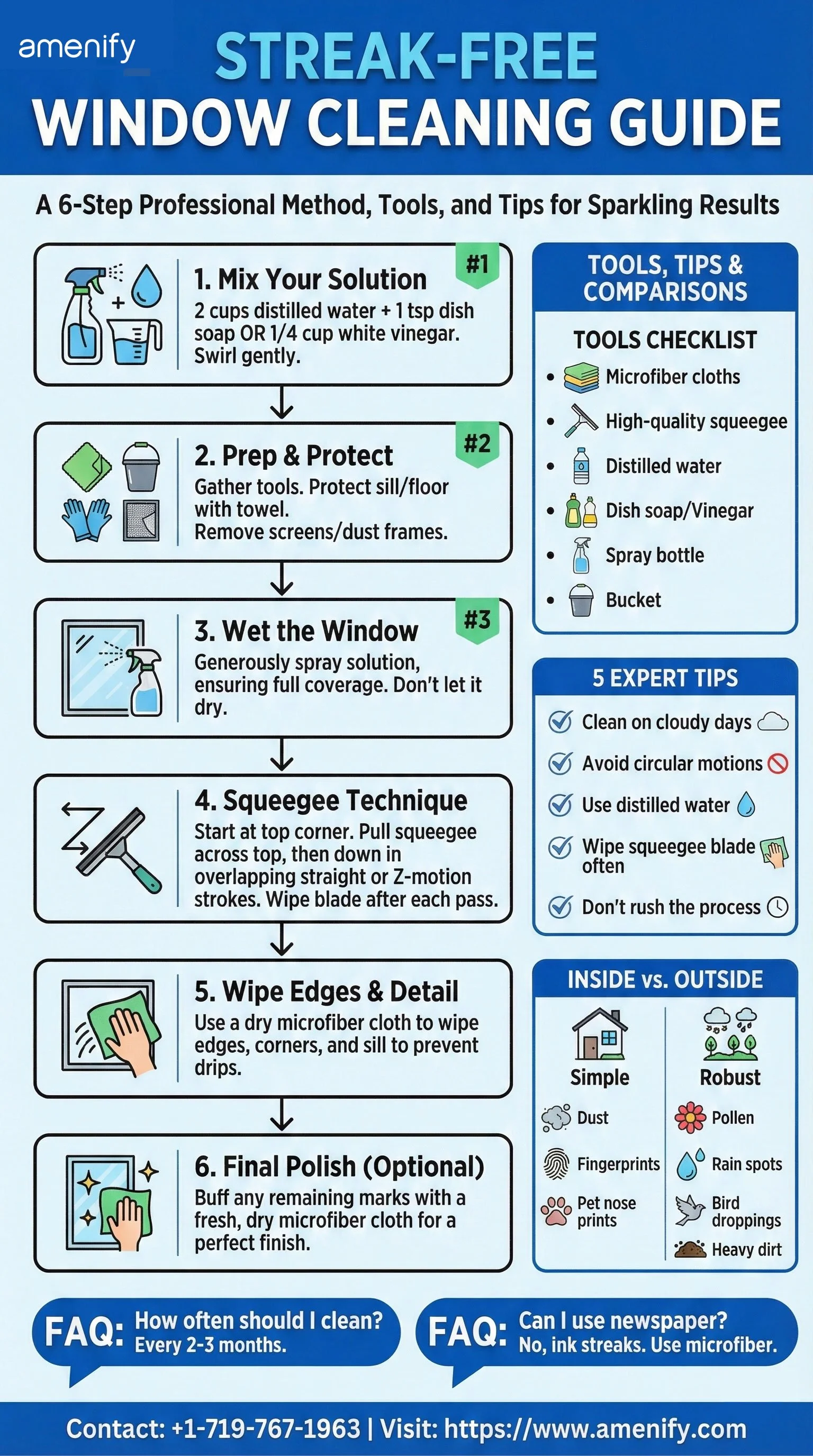
6 Steps to Clean Windows Without Streaks
How to Clean Inside vs. Outside Windows
Extra Tips to Keep Windows Cleaner for Longer
Why Your Windows Keep Getting Streaks
When to Call a Window Cleaning Service
Conclusion
FAQs
What You Need to Clean Windows Without Streaks
Before starting, gather the following items to ensure a fast and smooth process:
Microfiber cloths
A squeegee
Soft scrub brush
Distilled water
Mild dish soap or vinegar
Bucket or spray bottle
Why distilled water?
It prevents mineral deposits that cause streaks, one of the biggest mistakes homeowners make.
Also Read: Professional Cleaning Services Near Me
6 Steps to Clean Windows Without Streaks

Achieve streak-free windows with a simple DIY window cleaning solution.
Follow these six steps for a streak-free shine.
Step 1: Mix a Simple DIY Cleaning Solution
You don’t need fancy products. Professionals use this formula:
2 cups distilled water
½ teaspoon dish soap, OR
1 cup vinegar (if glass is very greasy)
Why this works: dish soap removes grime, vinegar cuts through residue, and distilled water prevents streaks.
Step 2: Prep Your Windows
If you skip this, the dust mixes with your solution and creates streaks. Use a vacuum or a soft brush for best results. Before cleaning the glass, remove dust from:
Frames
Tracks
Corners
Window edges
Step 3: Wash Window Frames First
Frames hold most of the hidden dirt. If you clean the glass first, water runs down and brings dust onto it. Wipe using a damp cloth and mild soap. We recommend starting with the top frame and working your way down to avoid dripping dirt.
Before addressing the glass, clean the window frames:
Avoid Power Washing: The intense pressure can damage delicate frames or seals.
Use Warm, Soapy Water: Soak a rag in warm, soapy water and gently wipe the frames. Avoid abrasive mineral-based cleaners, as they may scratch or discolor the material.
Clean window frames provide a polished look and prevent dirt from transferring onto the glass.
Step 4: Clean Glass from Top to Bottom
Spray your DIY solution lightly; don’t soak the glass. This method prevents streaks and gives a smooth, professional finish.
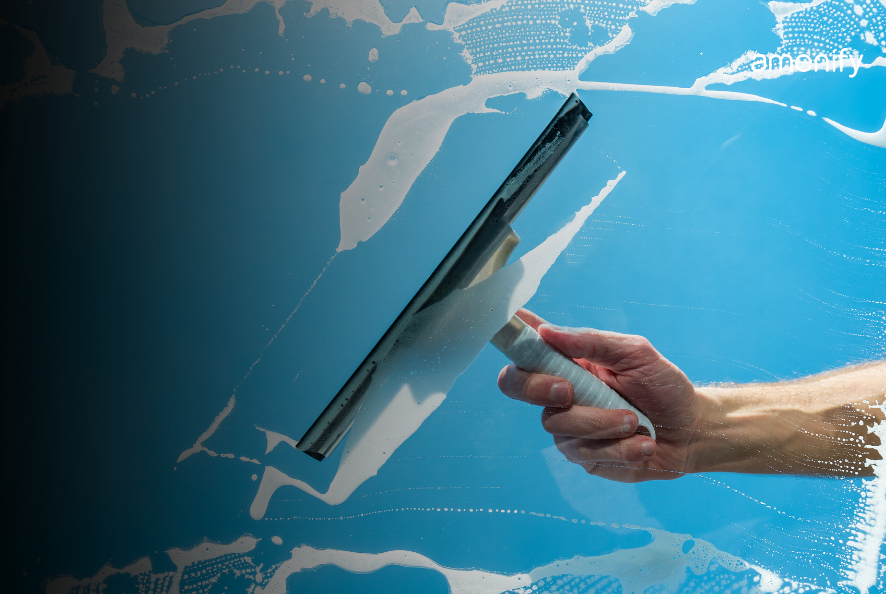
Then use your squeegee:
Start at the top corner.
Pull downward in straight lines.
Wipe the squeegee after each pass.
Cleaning Double-Hung Windows
Double-hung windows are common in many U.S. homes, and they tilt inward, making cleaning both sides much easier.
To clean them:
Tilt inward
Clean the interior side
Clean the exterior side
Let both panels air-dry before locking them back
If you avoid tilting them properly, you may leave behind smudges on the top sash, one of the most overlooked spots.
Step 5: Vacuum Window Screens
Screens collect pollen, dust, and debris. Cleaning them helps your windows stay cleaner for longer.
Steps:
Remove the screen.
Vacuum lightly.
If greasy, wash with mild soap and rinse. Let it dry completely.
Step 6: Dust Blinds and Shades
Cleaning everything around the window ensures the shine lasts.
If you skip blinds and shades, they’ll blow dust onto freshly cleaned windows.
You can clean them with:
A microfiber duster
A vacuum brush
A slightly damp cloth
How to Clean Inside vs. Outside Windows
Outdoor windows collect heavier dirt, such as
Pollen
Bird droppings
Rain marks
Pollution
To clean exterior windows effectively:
Use a stronger cleaner: Add more vinegar or use warm water with dish soap.
Rinse before scrubbing: It will remove dust and reduce the chance of scratches when scrubbing.
Use a long-handled squeegee: Helps reach higher window panels safely.
Most homeowners choose to hire a professional window cleaning services instead of mounting a ladder for their second-story window cleaning.
Tips to Keep Your Windows Cleaner for Longer
These tips reduce streaks and extend the time between cleans.
Clean on a cloudy day: Sun dries the cleaner too fast and causes streaks.
Use microfiber only: Paper towels leave lint; microfiber doesn’t.
Avoid cleaning glass with circular motions: Straight lines prevent smears.
Use less cleaning solution: Too much solution leaves residue.
Wipe edges last: Use a dry cloth around borders; this is where most streaks hide.
When to Call a Window Cleaning Service
A window washing service can deep-clean frames, screens, tracks, and exterior panes, which is especially useful for homeowners with multi-floor properties. Professional window cleaning services use safe equipment and industry-approved methods to ensure clear, streak-free windows while protecting your home. If you're searching for window cleaning services near me, it usually means one of these situations applies:
Your windows are too high to reach safely
You have large glass panels or sliding doors
You’re dealing with stubborn hard-water stains
You don’t have the right tools
You want a professional-level shine without the hassle
Conclusion
Cleaning windows doesn’t have to be frustrating. With the right tools, a simple cleaning solution, and a clear step-by-step method, you can get streak-free, spotless windows every single time. And whenever the job feels too big, or you simply want a guaranteed perfect result, Amenify’s window cleaning service can take care of everything for you.
FAQs
-
A mix of distilled water and a few drops of dish soap works best for most homes.
-
Most homes need cleaning every 2–3 months, but high-pollen areas may require monthly cleaning.
-
Usually because of lint, mineral-filled water, or using too much cleaning solution.
-
Yes, vinegar cuts through grease and residue well, but combining it with distilled water gives better results.
-
Amenify provides many in-home services. Sign up to get $50 off on your first home service or product