

The Ultimate Teenage Chore List: Teaching Responsibility and Life Skills

Age-appropriate household chores help teenagers practice responsibility and everyday life skills
Why Chores Matter: The Importance of Household Responsibilities for Teenagers!
A useful teenage chore list includes everyday responsibilities such as making the bed, doing laundry, washing dishes, preparing simple meals, vacuuming shared spaces, and caring for pets. The right chores depend on a teenager's age, abilities, schedule, and experience. A simple weekly chore chart can help families divide household tasks fairly while teaching practical life skills.
Household chores are about more than keeping a home tidy. They give teenagers opportunities to practice responsibility, time management, cooperation, and skills they will need when living independently.
The key is to assign tasks that are manageable, explain what completing each task looks like, and give teens some say in how they organize their responsibilities.
Why Are Chores Important for Teenagers?
Chores help teenagers become active contributors to family life. Instead of relying on a parent to handle every household task, teens can learn to manage everyday responsibilities themselves.
The American Academy of Pediatrics recommends age-appropriate household responsibilities for adolescents, including cleaning shared spaces, caring for pets, helping with meal preparation, and contributing to outdoor tasks.
Here are four practical benefits of giving teenagers regular chores:
Responsibility: Teens learn to follow through on commitments and understand how their actions affect other family members.
Time management: Completing chores alongside homework, sports, and social activities helps them practice planning their day.
Independent living skills: Laundry, cooking, cleaning, and basic household organization are useful skills for college, a first apartment, or living away from home.
Teamwork: Shared chores show that maintaining a home is a collective responsibility rather than one person's job.
The goal isn't to create a perfect household or keep teenagers busy every minute. It's to help them develop skills gradually while contributing to the family.
Need help keeping up with household tasks? Explore the cleaning and chores services available through Amenify Resident Services. Availability and options depend on your property and location.
Teenage Chore List: What Chores Can Teens Do by Age?
Teenagers can take on a growing range of household responsibilities as their skills and independence develop. Use the following lists as starting points, not strict age-based rules. A teen who has never cooked independently may need more guidance than someone who has been helping prepare family meals for years.
Chores for 13-Year-Olds
At 13, focus on building consistent habits and learning to complete familiar tasks from beginning to end.
Make the bed and keep the bedroom reasonably tidy.
Put dirty clothes in the laundry hamper.
Fold clean clothes and put them away.
Set and clear the dining table.
Load or unload the dishwasher.
Take out household trash when appropriate.
Feed pets according to the family's instructions.
Sweep floors or tidy common areas.
Organize school supplies and personal belongings.
Help prepare simple snacks.
Best approach: Start with a few predictable tasks and explain what a finished task looks like. Demonstrate unfamiliar chores before expecting a teenager to handle them independently.
You can also read: Tile Cleaning Services: Professional Methods, Costs, and Benefits in 2026
Chores for 14-Year-Olds
At 14, teens can often take more ownership of routine household tasks, provided they have learned the correct techniques.
Wash dishes or manage dishwasher duties.
Clean and organize the bedroom.
Dust furniture and wipe appropriate surfaces.
Sort, wash, dry, fold, and put away laundry.
Help prepare family meals.
Sweep or vacuum assigned rooms.
Water indoor or outdoor plants.
Replace bathroom towels and restock basic supplies.
Help organize groceries after a shopping trip.
Clean up after preparing food.
Best approach: Let your teen manage a complete task rather than assigning only one small step. For example, laundry can include sorting, washing, drying, folding, and putting clothes away.
Chores for 15-Year-Olds
At 15, many teens can practice more independent household management and take responsibility for selected weekly chores.
Vacuum carpets and shared living spaces.
Mop floors using appropriate cleaning products.
Prepare simple meals by following a recipe.
Plan ingredients for a family meal.
Clean kitchen counters and the dining area after meals.
Wash and fold personal laundry.
Walk a suitable family dog, where safe and permitted.
Help with yard work using safe, age-appropriate methods.
Organize pantry shelves or household supplies.
Wash the family car with suitable products.
Best approach: Introduce tasks that require planning, not just physical effort. Preparing a simple meal, for example, involves checking ingredients, following instructions, managing time, and cleaning up afterward.
Chores for 16-Year-Olds
At 16, teenagers may be ready to manage more complex responsibilities, depending on their training, judgment, and experience.
Prepare a complete family meal.
Manage a regular laundry routine.
Clean the kitchen after meal preparation.
Vacuum and clean designated shared spaces.
Help plan a grocery list.
Put away groceries and check pantry supplies.
Perform appropriate yard maintenance.
Wash the car and help maintain its cleanliness.
Manage a weekly schedule of assigned chores.
Help younger siblings with routine tasks when appropriate.
Grocery shopping and errands can also be useful learning experiences. Driving-related tasks should only be assigned when the teen is legally licensed, appropriately supervised where required, and following applicable restrictions.
Best approach: Increase independence gradually. A teenager who can follow a recipe safely may be ready to prepare dinner, while a new task involving equipment or unfamiliar tools may still require supervision.
Have a look at Kitchen Deep Cleaning: A Step-by-Step Guide, Checklist and Cost
Chores for 17- and 18-Year-Olds
Older teenagers can begin practicing the routines they will need for college, work, or independent living.
Plan and prepare selected family meals.
Manage personal laundry from start to finish.
Clean bathrooms using appropriate products.
Maintain a regular bedroom and shared-space cleaning routine.
Create grocery lists and compare prices.
Help plan household meals and food supplies.
Organize personal appointments and weekly responsibilities.
Learn basic budgeting through supervised household planning.
Help with suitable seasonal yard work.
Learn simple home maintenance tasks that do not involve unsafe repairs.
Older teens may also practice understanding utility bills, household budgets, or maintenance schedules with a parent or guardian. These are learning activities, not chores every teenager must perform.
Best approach: Focus on readiness for adult life. Give older teens responsibility for completing an agreed task, checking their own work, and asking for help when something is unfamiliar.
How Many Chores Should a Teenager Have?
There is no universal number of chores that every teenager should complete each day. The right amount depends on how long tasks take, the teenager's experience, school demands, extracurricular activities, work commitments, and the responsibilities shared by other household members.
A practical starting point is to assign a small number of recurring personal chores, then add one or two shared household responsibilities across the week. Review the workload together and adjust it when circumstances change.
Consider these examples:
A busy school day: Make the bed, put away personal items, and complete one short household task.
A lighter weekday: Add laundry, dishwasher duties, or meal preparation.
A weekend: Schedule a longer task, such as vacuuming shared spaces or cleaning the bathroom.
An exam or unusually busy week: Agree in advance on which tasks must still be completed and which can be moved.
These are planning examples, not mandatory quotas. The aim is to establish a dependable routine without making chores an unreasonable burden.
A Weekly Chore Chart for Teenagers
A weekly chore chart helps everyone understand who is responsible for each task and when it should be completed. It also makes it easier to spot an unfair workload before frustration builds.
Here is a sample schedule families can adapt.
| Day | Suggested Chore | Estimated Time |
|---|---|---|
| Monday | Make the bed, tidy personal items, and load the dishwasher | 10–15 minutes |
| Tuesday | Fold and put away laundry | 15–25 minutes |
| Wednesday | Vacuum an assigned shared space | 15–20 minutes |
| Thursday | Help prepare dinner and clean the kitchen afterward | 20–30 minutes |
| Friday | Take out trash and reset the bedroom | 10–15 minutes |
| Saturday | Complete one larger task, such as bathroom cleaning or yard work | 20–40 minutes |
| Sunday | Check the schedule, organize school supplies, and prepare for the week | 10–20 minutes |
Time estimates are illustrative and depend on the size of the task, household, and level of cleaning required.
Read: House Cleaning Services: The Complete Guide to Finding the Right Fit for Your Home
How to Make the Chore Chart Work
List the necessary chores. Start with tasks that genuinely need to be done every day or week.
Assign clear ownership. Identify who is responsible for each task instead of relying on general reminders.
Set a realistic deadline. A chore can have a clear completion window without needing to happen at the exact same time every day.
Define what finished means. For example, doing laundry means putting clean clothes away, not leaving them in a basket.
Rotate shared tasks fairly. Change assignments periodically so one person isn't always responsible for the least popular chores.
Review the chart weekly. Adjust the plan around tests, sports, work shifts, family plans, and other commitments.
Families can use a printed chart on the refrigerator, a shared calendar, or a digital checklist. The simplest system is usually the one everyone can understand and maintain.
Daily, Weekly, and Monthly Chores for Teens
Separating chores by frequency can make the workload easier to manage.
| Frequency | Examples | Purpose |
|---|---|---|
| Daily | Make the bed, put away personal items, clear dishes, and feed pets as scheduled | Maintain basic routines |
| Weekly | Vacuum, do laundry, clean the bathroom, and help prepare meals | Keep the household running |
| Monthly or as needed | Organize a closet, clean out a backpack, and help with seasonal yard work | Handle occasional maintenance |
Not every chore belongs in every household. Apartment residents may not have a yard or driveway, while families in houses may have additional outdoor responsibilities. Choose tasks that fit your home.
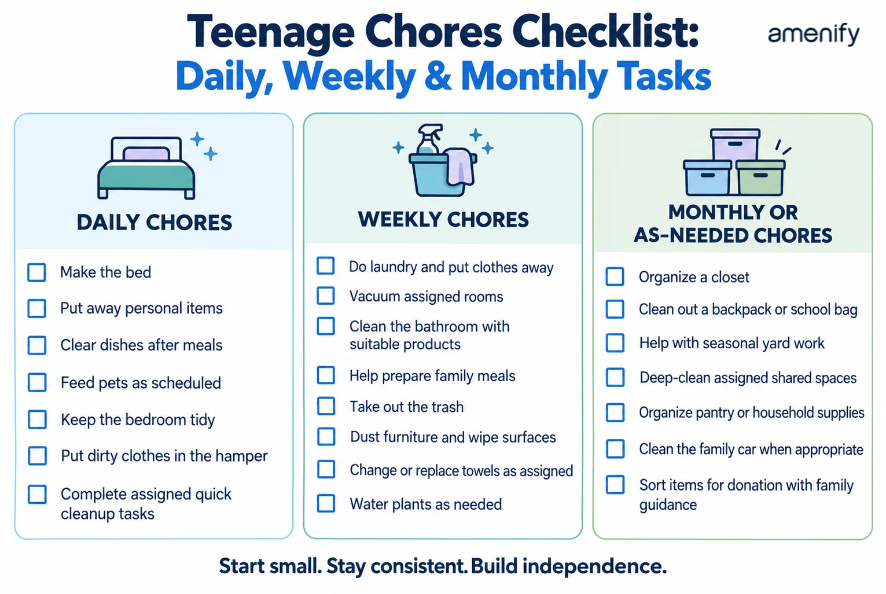
A list comes in handy while assigning tasks to teenagers.
How Can Parents Motivate Teenagers to Do Chores?
If chores lead to repeated arguments, the solution may be to make expectations clearer rather than adding more reminders or more tasks.
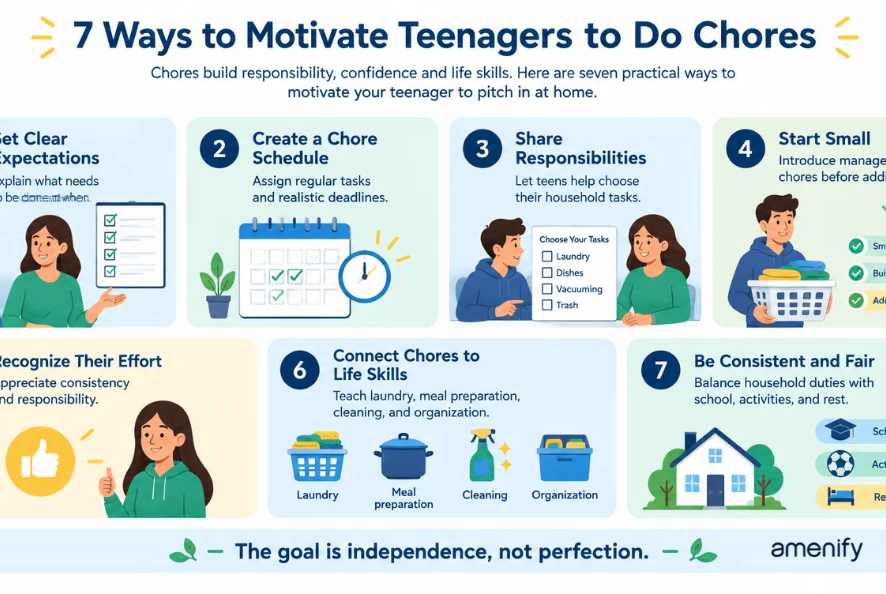
Ways to Motivate Teenagers to Do Chores
1. Involve Teens in the Planning
Discuss which chores need to be done and ask your teen which tasks they prefer. Let them choose between suitable options when possible.
For example, a teenager might choose between vacuuming the living room on Saturday or cleaning the bathroom on Sunday. Both tasks get completed, but the teen has some control over the schedule.
2. Explain What Each Chore Involves
"Clean the kitchen" can mean different things to different people. Clarify whether the task includes washing dishes, wiping counters, cleaning the dining table, and putting away food.
Clear instructions reduce misunderstandings and make it easier for teens to work independently.
3. Recognize Consistent Effort
Acknowledge when your teen completes a task without reminders or handles a new responsibility well. Positive feedback can reinforce the habit without turning every household contribution into a negotiation.
4. Discuss Allowance and Paid Chores Separately
Families can choose to include chores in normal household expectations, pay for selected extra tasks, or use a combination of both. There is no single allowance amount that fits every family.
If you decide to pay for chores, agree on the amount, the task, and the payment schedule in advance. Keep essential shared responsibilities distinct from optional jobs that earn extra money.
5. Adjust the Plan When Schedules Change
A teenager with exams, a part-time job, or a demanding sports schedule may need a different arrangement for a short period. Discuss changes before deadlines are missed while keeping a reasonable level of household participation.
Need help with recurring household tasks? Visit Amenify's Chores Services to explore the chores and cleaning options available through your community.
How Amenify Can Help With Everyday Household Tasks
A teenage chore list can help families divide responsibilities and teach essential life skills. For tasks that still need to be handled by adults or that require extra time, Amenify offers resident-focused services that can include cleaning, chores, and other household support, depending on the property and location.
Families can check the available options before deciding which tasks to handle themselves and which may be suitable for professional help.
Join Amenify today and get $300 in Amenify credits to use toward eligible services, including cleaning, chores, food and grocery services, handyman services, protection plans, and other home services.
FAQs
-
Chores for 14 year olds include washing dishes, taking out the garbage, dusting furniture, and helping with meal prep as part of their daily chores for teens.
-
Chores for 17 year olds should involve adult responsibilities like managing household bills, deep cleaning, minor home repairs, and coordinating family schedules.
-
A chore list for teens at 15 should include 3-4 household tasks per day, such as vacuuming, cooking simple meals, and running errands to build independence.
-
A list of chores for 13 year olds includes making their bed, folding laundry, feeding pets, and sweeping the floor to establish responsibility through house chores.
-
Chore payments for 14 year olds typically range from $5 to $10 per chore or a weekly allowance of $10-$25, depending on the complexity of their household tasks.
-
Besides children chores, 13-year-olds participate in school activities, social events, hobbies, and light family chores, helping with tidying up and pet care.